
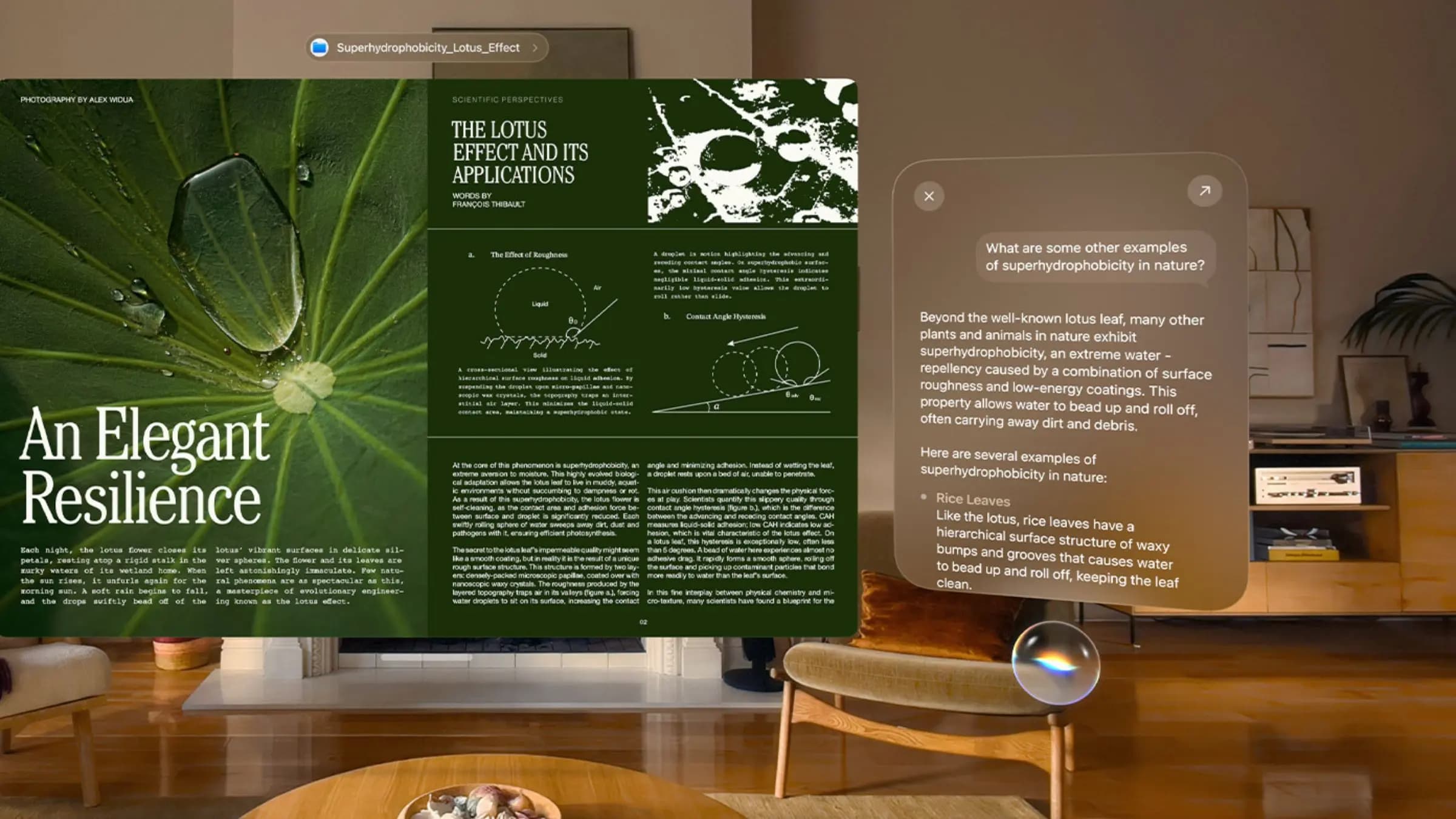
visionOS 27 Is Here — But Not Every Feature Is for Everyone
Apple has officially unveiled visionOS 27, the latest major software update for the Apple Vision Pro lineup. While the update brings a wide range of improvements to all supported headsets, Apple has drawn a clear line in the sand: two of the most anticipated new features will be exclusive to the second-generation Apple Vision Pro, powered by the M5 chip. If you own the original Vision Pro, those particular capabilities are simply off the table — permanently.
This kind of hardware-gated feature rollout is not unprecedented for Apple. The company has long reserved cutting-edge software capabilities for its newest silicon, pushing users toward upgrades while ensuring that flagship experiences feel truly premium. With visionOS 27, that strategy extends decisively into spatial computing.
What Is visionOS 27?
visionOS 27 is Apple's latest operating system update for the Apple Vision Pro family of spatial computing headsets. Like previous visionOS releases, it builds on the foundation of Apple's immersive computing platform, adding refinements to spatial audio, window management, app interactions, and developer tools. The update is designed to push the boundaries of what users can do inside Apple's mixed-reality environment, whether they are working, watching content, communicating, or exploring immersive experiences.
The update is available to all Apple Vision Pro models, meaning first-generation owners running the original M2-powered headset will still receive the majority of visionOS 27's improvements. However, the two standout headline features of this release are firmly locked to the M5 chip inside the second-generation device.
Why the M5 Chip Makes the Difference
The Apple M5 chip represents a significant leap in processing power, neural engine capability, and graphics performance compared to the M2 that powered the original Vision Pro. When Apple designed the second-generation headset, the goal was not just incremental improvement — it was to create hardware capable of enabling entirely new categories of spatial computing experiences that simply cannot run on older silicon.
The two features exclusive to the M5 Vision Pro are not arbitrary marketing decisions. They require the raw computational throughput, advanced machine learning acceleration, and enhanced display processing that only the M5 architecture can deliver in real time. Running them on an M2 chip would either be technically impossible or would degrade the experience to the point of being unusable — neither of which meets Apple's quality threshold for a public release.
The Two Exclusive visionOS 27 Features
Feature One: Advanced Spatial Intelligence Processing
The first exclusive feature centers on a dramatically enhanced level of real-time environmental understanding. The M5 Vision Pro can now process the physical space around the user with far greater depth and accuracy than before, enabling richer, more seamlessly integrated mixed-reality overlays. Apps and system-level features can now respond dynamically to furniture placement, lighting conditions, and room geometry in ways that feel genuinely reactive rather than pre-scripted.
This kind of persistent, granular spatial awareness demands continuous, high-speed processing that the M5's neural engine handles with headroom to spare. The M2, while capable, simply cannot sustain this level of environmental modeling at the frame rates required for a comfortable and convincing mixed-reality experience. The result for M5 users is a headset that feels less like a device overlaid on the world and more like a natural extension of it.
Feature Two: Next-Generation Persona Rendering
The second M5-exclusive feature is a major overhaul of Apple's Persona system — the digital avatar representation used during FaceTime calls and collaborative spatial experiences. visionOS 27 introduces a new generation of Persona rendering that delivers significantly more realistic facial expressions, skin texture fidelity, and real-time emotion mapping.
Achieving this level of photorealism in real time requires the M5 chip's enhanced machine learning performance and upgraded GPU capabilities. The improvements to Persona go beyond cosmetic polish; they represent a meaningful step toward the kind of digital presence that can feel genuinely lifelike in a spatial computing environment. For enterprise users relying on Vision Pro for remote collaboration, or consumers using it for social connection, the upgraded Persona feature could be one of the most impactful additions in the headset's history.
What First-Generation Vision Pro Owners Still Get
It is worth emphasizing that first-generation Apple Vision Pro owners are not left out in the cold with visionOS 27. The update still delivers a meaningful range of improvements to the original headset, including:
- Refined window management and multitasking layouts for more productive workflows
- Updated spatial audio processing for more immersive and directionally accurate sound
- Improved EyeSight display calibration for more natural external expressions
- New developer APIs that enable richer third-party app experiences across all supported hardware
- Performance optimizations that help the M2 model run existing apps more smoothly and efficiently
These are not trivial additions. For everyday users, visionOS 27 will feel like a noticeably more polished and responsive experience even on the original headset. The gap between the two models widens at the high end, but the baseline experience on M2 hardware continues to improve.
Should You Upgrade to the M5 Vision Pro?
The question of whether to upgrade hinges largely on how central these two exclusive features are to your intended use of the device. For professional users, creative workflows, and anyone who relies on Persona-based communication, the M5 model's enhancements in visionOS 27 represent a compelling leap forward. For casual users primarily consuming content or using productivity apps, the original Vision Pro running visionOS 27 still delivers a highly capable spatial computing experience.
What is clear is that Apple has deliberately positioned the M5 Vision Pro as the platform where the most transformative spatial computing experiences will live going forward. visionOS 27 makes that positioning more explicit than ever.
The Bigger Picture for Spatial Computing
The decision to gate features behind specific hardware generations is a familiar Apple strategy, but it carries particular weight in the nascent world of spatial computing. As visionOS matures, the divide between what different hardware generations can do will only grow wider. visionOS 27's M5-exclusive features signal that Apple is accelerating the pace at which Vision Pro becomes a genuinely transformative platform — and that the M5 chip is the key that unlocks its most ambitious capabilities.
For anyone invested in the future of spatial computing, visionOS 27 is a milestone release. It expands what all Vision Pro headsets can do while offering the clearest preview yet of where the platform is headed for those with the hardware to get there first.