
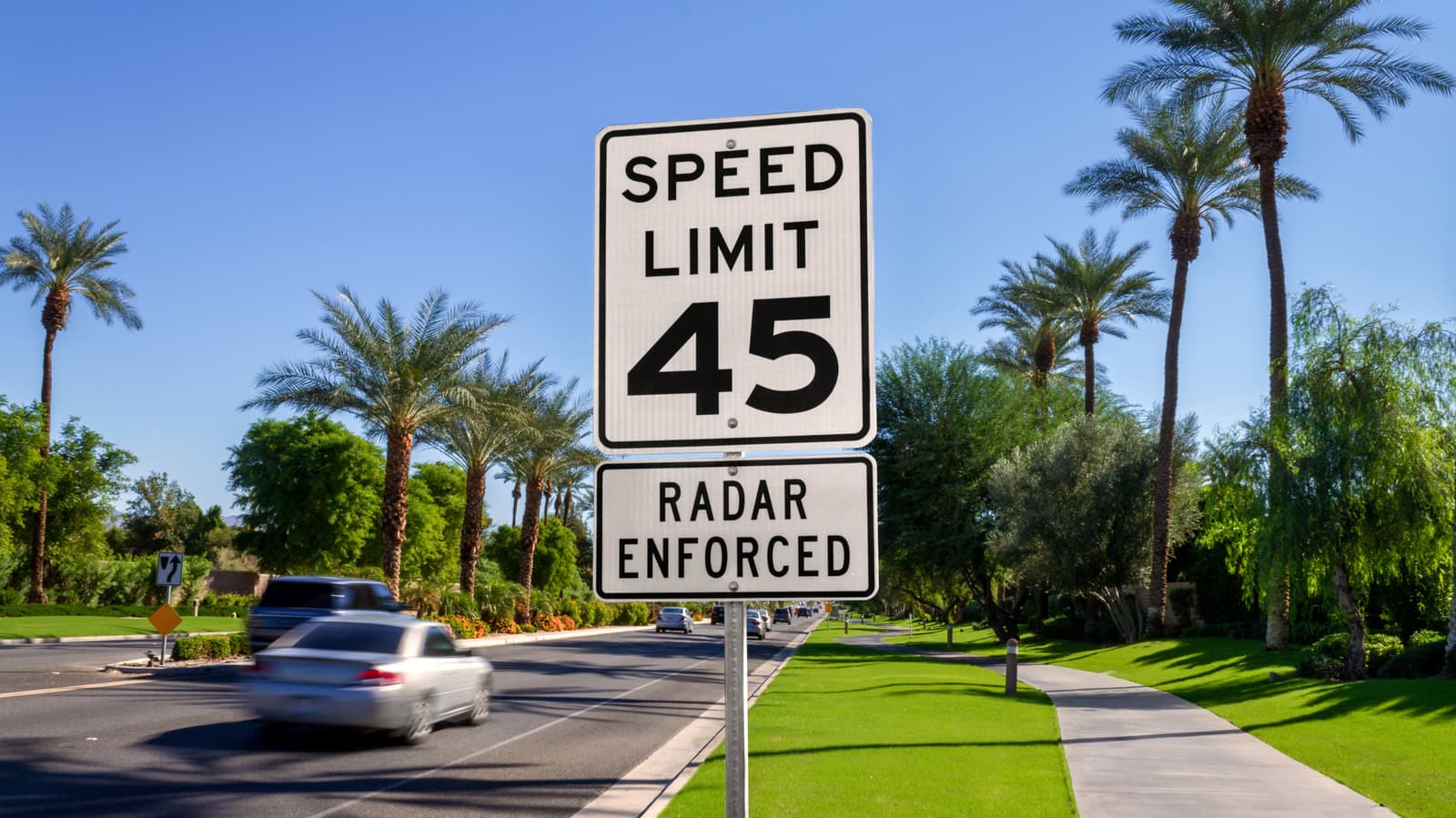
Why Are Some Speed Limit Signs Smaller Than Others?
If you spend any time behind the wheel, you've probably noticed that not all speed limit signs look the same. While the familiar black-and-white rectangular design is consistent across the country, the physical size of those signs can vary quite a bit depending on where you're driving. A sign posted on a quiet residential street might look noticeably smaller than one you'd find along a busy interstate highway. This isn't a mistake, and it isn't random either. There are very specific, federally regulated reasons why speed limit signs come in different sizes — and understanding those reasons can give you a new appreciation for the surprisingly complex world of traffic engineering.
The Federal Standard Behind Traffic Sign Sizing
Traffic signs in the United States are governed by a document called the Manual on Uniform Traffic Control Devices, commonly known as the MUTCD. Published and maintained by the Federal Highway Administration (FHWA), this manual serves as the national standard for all traffic control devices — including signs, signals, and road markings — on any public road in the country. Every state is required to adopt its standards, though some states have their own supplemental guidelines.
The MUTCD specifies minimum size requirements for speed limit signs based on a straightforward principle: the faster traffic moves, the larger and more visible the sign needs to be. Drivers traveling at high speeds have far less time to notice, read, and react to roadside signage, so signs must be larger to compensate for that reduced reaction window. Conversely, in areas where traffic moves slowly, drivers have more time to spot and read a smaller sign without any reduction in safety or compliance.
How Road Type Determines Sign Size
The MUTCD breaks down sign sizing requirements according to the type of road on which a sign is installed. Here's a general overview of how this works in practice:
- Conventional roads in rural and suburban areas: Speed limit signs on standard two-lane roads and similar lower-speed environments are typically 24 inches by 30 inches. These are the most commonly seen signs in residential neighborhoods and rural routes where speeds generally fall between 25 and 55 mph.
- Expressways and multilane highways: On roads designed for higher-speed travel, the MUTCD recommends larger signs — typically 36 inches by 48 inches. The increased size ensures that drivers moving at 60 mph or more have enough time to read the sign from a safe distance.
- Freeways and interstates: The largest speed limit signs are reserved for controlled-access freeways. These can measure up to 48 inches by 60 inches, and in some cases even larger. At highway speeds, visibility from hundreds of feet away is essential.
- Low-speed urban environments: In some highly controlled urban areas with very low speed limits, such as parking lots or school zones approached at walking pace, smaller signs may be used. The MUTCD permits reduced sizes when traffic conditions and sight distances clearly support it.
These measurements represent minimums, not maximums. Jurisdictions are free to use larger signs than what the MUTCD requires, but they generally cannot go smaller without a documented engineering justification.
Visibility, Legibility, and Reaction Time
The science behind sign sizing is deeply rooted in human factors research — the study of how people perceive and interact with their environment while performing tasks like driving. Traffic engineers rely on established data about how far away a driver can legibly read text of a given size, known as the legibility distance. The standard letter height used on speed limit signs is designed so that a driver with normal vision can read the number from a comfortable distance, giving them adequate time to adjust their speed if necessary.
On a 70 mph freeway, for example, a car covers over 100 feet per second. A sign that works perfectly well at 25 mph would be nearly impossible to read in time at that speed. By scaling up the sign dimensions and the size of the numerals printed on it, traffic engineers ensure that legibility distance keeps pace with travel speed. It's a carefully calculated balance between road safety and practical infrastructure costs.
Other Factors That Can Influence Sign Size
Beyond road classification and speed, several other factors can influence which size sign a transportation authority chooses to install:
- Sign placement: A sign installed on the right shoulder of a road may be sized differently than one placed on an overhead gantry or a median barrier, since viewing angles and distances differ significantly.
- Driver population: Roads with a high proportion of older drivers or in areas with significant tourist traffic may opt for larger signs to improve clarity and compliance across a diverse range of users.
- Accident history: If a particular stretch of road has a documented history of speed-related accidents, authorities may upgrade to larger, more prominent signage as part of a broader safety improvement package.
- Retroreflectivity requirements: The MUTCD also specifies how reflective signs must be for nighttime visibility. In some cases, using a larger sign can help meet retroreflectivity standards more easily in challenging lighting environments.
Why Uniformity Still Matters
While size varies, the overall design of speed limit signs — white background, black border, black numerals, and the words "SPEED LIMIT" at the top — remains consistent no matter where you are in the country. This uniformity is intentional and critical. Drivers who move between states, cities, or road types need to instantly recognize a speed limit sign without having to puzzle over an unfamiliar design. Standardization reduces cognitive load and helps ensure that the message is understood quickly, regardless of the sign's physical dimensions.
The MUTCD has enforced this standardization since its first edition in 1935, and the consistency it provides is a cornerstone of American road safety policy. Size may change based on context, but the language of the sign stays universal.
The Bottom Line
The next time you notice a particularly small speed limit sign on a neighborhood street or a towering one along the highway, you'll know that it's no accident. Every sign is sized according to federal guidelines that account for vehicle speed, road type, driver reaction time, and visibility distance. What appears to be a minor design detail is actually the result of decades of traffic engineering research aimed at keeping roads as safe and readable as possible. Speed limit signs may seem like background noise on your daily commute, but they represent a carefully calibrated system working quietly in your favor every time you get behind the wheel.