
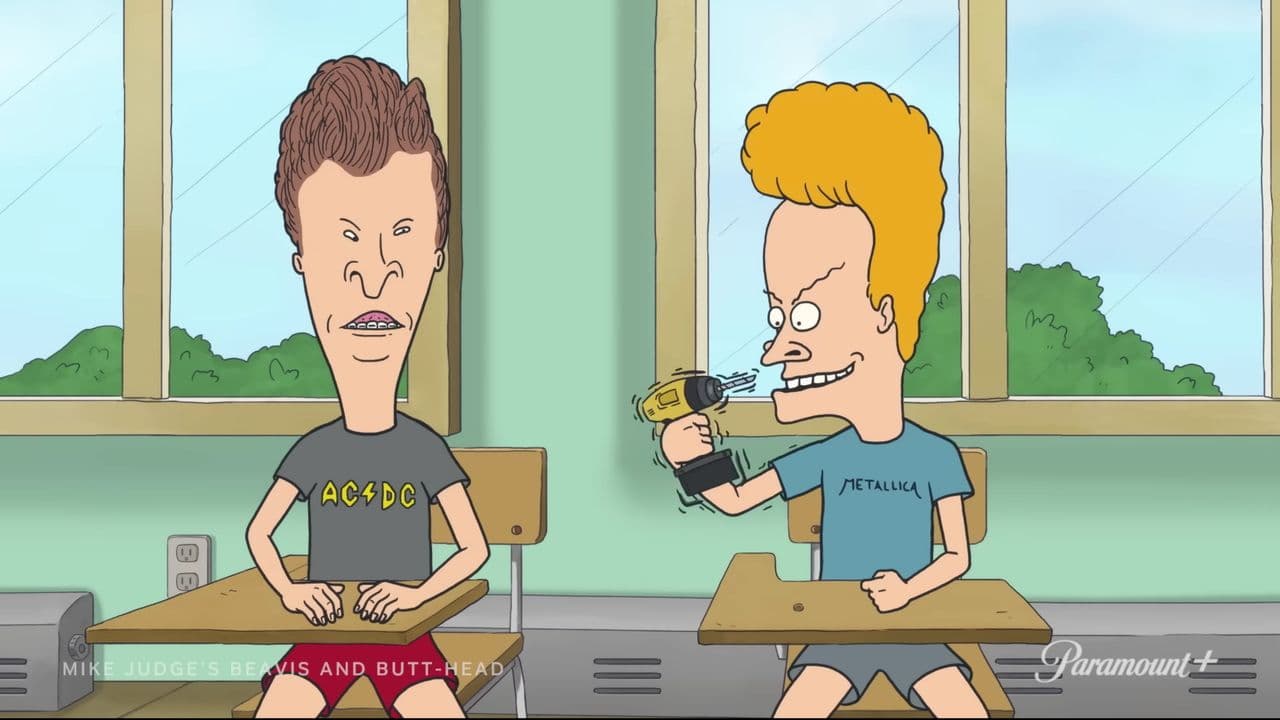
Beavis and Butt-Head Are Back — and Netflix Might Be Their Best Platform Yet
There's a certain kind of dread that comes with hearing your favorite childhood show is getting a reboot. You know the feeling: a wave of nostalgia immediately followed by a creeping suspicion that something beloved is about to be quietly ruined. When news broke that Beavis and Butt-Head — Mike Judge's legendarily stupid, surprisingly sharp animated duo — were returning and landing on Netflix, that dread hit hard. And yet, after actually sitting down and watching the reboot, the verdict is clear: the skeptics were wrong. This revival not only works, it occasionally soars.
Why Were People So Skeptical in the First Place?
Skepticism about the Beavis and Butt-Head reboot wasn't baseless. The history of rebooting beloved animated properties from the 1990s is littered with cautionary tales. Shows that defined a generation have been revived only to feel hollow, corporate, or worse — desperate. The original Beavis and Butt-Head, which ran on MTV from 1993 to 1997 (with a brief return in 2011), was deeply tied to a specific cultural moment: the rise of slacker culture, the dominance of music video television, and a particularly anarchic strain of American teenage apathy. Translating that to the present day seemed like a genuine challenge.
Beyond the cultural time-stamp issue, there was the question of relevance. Comedy has changed. Audiences have changed. The kind of blunt, purposely lowbrow humor that made Beavis and Butt-Head iconic in the early 1990s has been both imitated to exhaustion and surpassed by increasingly absurdist alternatives. Could two dim-witted metalheads from Highland, Texas possibly feel fresh in an era of hyperaware, self-referential internet humor?
What Mike Judge Got Right This Time
The short answer is: almost everything. Mike Judge, who created the original series and has remained one of the sharpest satirists working in American entertainment — the man behind Office Space, Idiocracy, and Silicon Valley — approached the reboot with both affection for the source material and a clear-eyed understanding of why it works.
The genius of the original Beavis and Butt-Head was never really about stupidity for its own sake. It was about two completely oblivious characters serving as an unintentional mirror for the culture around them. Their commentary on music videos — sitting on a couch and delivering half-comprehending verdicts on whatever MTV played — was genuinely incisive precisely because it was so unguarded. They had no filters, no agenda, and no self-awareness, which made their reactions weirdly honest.
In the reboot, Judge preserves that essential dynamic while updating the context. The duo still sit on a couch and react to content, but now that content includes YouTube videos, streaming clips, and the broader landscape of internet culture. The shift feels natural rather than forced, and the jokes land because the format genuinely maps onto how people consume media today. Watching Beavis and Butt-Head try to parse the logic of a viral video or a social media trend is, if anything, funnier now than the music video segments were in the 1990s — because the gap between what the content is trying to do and what they understand it to be is even wider.
The Animation Has Been Upgraded — But the Spirit Hasn't
One of the quieter successes of the reboot is how it handles the visual side of things. The animation has been noticeably improved without losing the deliberately crude aesthetic that was always part of the show's identity. Beavis and Butt-Head still look like Beavis and Butt-Head — angular, slightly unsettling, never quite right — but the movement is smoother and the world around them feels more detailed. It's an upgrade that respects rather than erases the original's visual language.
The voice work, again provided entirely by Judge himself, remains one of the most impressive one-man performances in animated television. Both characters feel exactly as they should: unchanged by time, unaffected by growth, blissfully unaware that the world has moved on without them. That stasis, which might seem like a creative limitation, turns out to be the show's greatest asset.
Why Netflix Is Actually a Great Home for This Show
The move to Netflix represents more than just a change of address. Streaming gives the show a freedom that cable television never quite could. There are no commercial breaks to structure around, no network executives nervous about advertiser sensitivities, and no pressure to appeal to a broad daytime audience. The result is a version of Beavis and Butt-Head that feels liberated — able to linger on a joke, push a bit harder, or dial back into something quieter without the rhythmic obligations of traditional broadcast comedy.
Netflix's global reach also means new audiences who may have only vaguely heard of the original are discovering the show fresh, while longtime fans are getting something that rewards their loyalty without pandering to it.
Should You Watch the Beavis and Butt-Head Reboot?
If you were a fan of the original, the answer is an unambiguous yes. The reboot honors what made the show great while finding genuinely new territory to explore. If you've never watched Beavis and Butt-Head before, this is actually a reasonable place to start — the premise is simple enough that no prior knowledge is required, and the humor is more accessible than the show's reputation might suggest.
And if you're a skeptic? Consider this a formal invitation to be wrong in the most entertaining way possible. The couch is still there. Beavis and Butt-Head are still on it. And somehow, against all reasonable odds, it still works.