
AWE 2026 Delivered a Clear Message: XR Is No Longer the Future — It's Now
Every year, the Augmented World Expo (AWE) serves as the most important barometer for where extended reality technology is heading. AWE 2026 was no exception. From sleek smartglasses designed for all-day wear to enterprise-grade mixed reality headsets pushing the boundaries of spatial computing, this year's show floor was packed with hardware that felt less like prototypes and more like products ready to change how we live and work. We rounded up the seven standout gadgets from AWE 2026 that best capture the current momentum — and the exciting trajectory — of XR.
What Makes AWE 2026 Different From Previous Years?
In previous years, AWE showcased a lot of promise wrapped in bulky, expensive, and often finicky hardware. AWE 2026 marked a turning point. The devices on display this year were noticeably thinner, more powerful, and — critically — more attuned to real user needs. Battery life has improved dramatically, display clarity is reaching near-retinal resolutions, and AI integration has become table stakes rather than a selling point. The seven gadgets below represent the best of that maturation.
1. Next-Generation All-Day Smartglasses
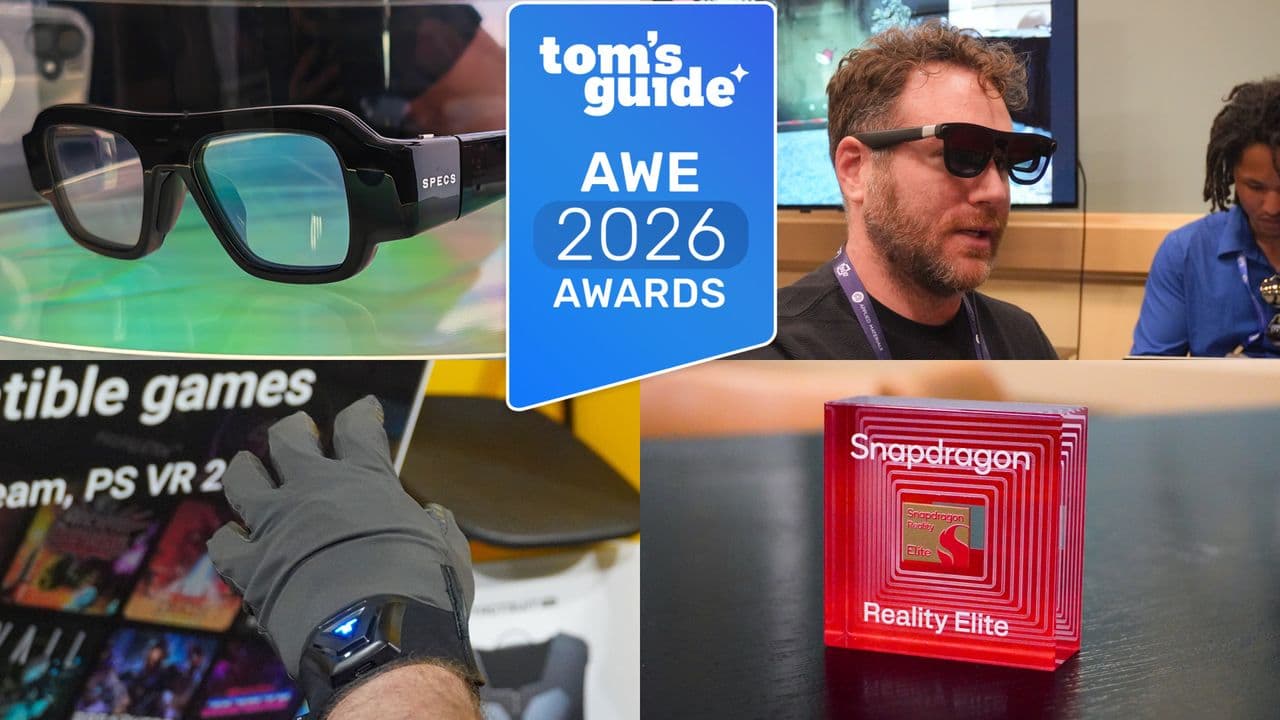
Perhaps the most talked-about category at AWE 2026 was the new wave of consumer-facing smartglasses designed to be worn from morning to night without discomfort or embarrassment. Leading contenders sported waveguide displays refined to the point where digital overlays blend almost seamlessly with the physical world. These aren't novelty gadgets — they feature always-on AI assistants, real-time translation, navigation overlays, and notification management baked directly into frames that look indistinguishable from standard eyewear. This is the form factor that every XR company has been chasing for a decade, and 2026 is the year it finally looks achievable.
2. Standalone Mixed Reality Headsets With Spatial AI
Enterprise and prosumer mixed reality headsets took a major leap forward at AWE 2026. The latest standalone headsets no longer rely on tethered PCs or companion phones to deliver high-fidelity mixed reality experiences. Onboard spatial AI chips enable real-time scene understanding, object recognition, and dynamic occlusion — meaning digital objects now convincingly sit behind and interact with physical surfaces. For industries like architecture, surgery, and manufacturing, this level of spatial accuracy is transformative. Several headsets demonstrated hand-tracking precision fine enough to manipulate virtual components at a molecular level of detail.
3. Open-Ear Spatial Audio Wearables
XR is not just visual, and AWE 2026 made that abundantly clear with a new class of open-ear spatial audio wearables. These devices use advanced head-related transfer function (HRTF) personalization combined with real-time environmental audio mapping to deliver immersive 3D soundscapes without isolating the wearer from their surroundings. Paired with smartglasses or used independently, they represent the audio layer of a broader ambient computing ecosystem that is steadily assembling itself around us.
4. Haptic XR Gloves Designed for the Mainstream
Haptic gloves have been a fixture of XR trade show floors for years, but they've historically been expensive, fragile, and awkward to wear. AWE 2026 introduced a new generation of haptic gloves aimed at a much broader audience. Lightweight, washable, and priced closer to a high-end gaming peripheral than an enterprise tool, these gloves use micro-actuator arrays across the fingers and palm to simulate texture, resistance, and even temperature. The implications stretch from training simulations and remote collaboration to gaming and retail experiences where customers want to "feel" a product before buying it.
5. AI-Powered XR Development Platforms
Not every standout at AWE 2026 was a wearable device. Several software-hardware hybrid platforms stole the spotlight by dramatically lowering the barrier to building XR experiences. These platforms use generative AI to convert natural language descriptions into fully realized 3D environments and interactive AR overlays, putting XR content creation within reach of businesses that previously couldn't justify the development cost. For marketers, educators, and retailers, this is arguably the most impactful category at the entire show.
6. Ultra-Compact XR Projectors
Compact XR projectors capable of turning any flat surface into an interactive display were a genuine surprise hit at AWE 2026. Palm-sized and battery-powered, these devices use structured light and depth sensing to understand the geometry of a surface before projecting context-aware content onto it. Place one on a kitchen counter and it becomes a recipe display; set it on a conference table and it becomes a collaborative spatial workspace. The best versions demonstrated at AWE offer touch interaction, meaning users can tap, drag, and resize projected content with their bare hands.
7. Health and Biometric XR Integration
Several of the most forward-looking devices at AWE 2026 combined XR with biometric sensing in ways that hint at a near future where your headset knows how you're feeling and adapts the experience accordingly. Eye-tracking is now being used not just for foveated rendering but for cognitive load monitoring. Heart rate and skin conductance sensors embedded in headset cushions feed real-time stress data to wellness applications. In clinical and occupational contexts, these capabilities open up entirely new use cases for XR as a tool for mental health, rehabilitation, and workplace safety.
The Bigger Picture: XR in 2026 and Beyond
What AWE 2026 ultimately demonstrated is that extended reality is completing its awkward adolescent phase. The hardware is maturing, the software ecosystems are deepening, and — perhaps most importantly — real users are starting to find genuine value in XR beyond novelty. The seven gadgets highlighted here aren't just impressive engineering achievements; they're signals of a platform shift as significant as the arrival of the smartphone. Whether you're a developer, an enterprise decision-maker, or simply a curious consumer, now is the time to pay close attention to what's happening in XR. The future arrived at AWE 2026 — and it looks remarkably wearable.