
Bong Joon Ho Was Already a Genre Master Before Parasite Changed Everything
When Parasite swept the 2020 Academy Awards — becoming the first non-English-language film to win Best Picture — the world suddenly wanted to know everything about its director, Bong Joon Ho. Critics scrambled to reassess his back catalog, casual moviegoers rushed to streaming platforms, and the phrase "the Bong Hive" entered the cultural lexicon almost overnight. Yet for those who had been paying attention long before that historic Oscars night, one title kept coming up again and again as the definitive proof that Bong was a singular filmmaker: The Host, his 2006 creature feature that remains, by almost any measure, one of the greatest sci-fi monster movies ever committed to film.
What Is The Host and Why Does It Matter?
The Host (Korean title: Gwoemul) was released in South Korea in the summer of 2006 and quickly became the highest-grossing Korean film of all time at that point, a record it held for several years. On the surface, it tells the story of a dysfunctional family scrambling to rescue their young daughter, Hyun-seo, after a grotesque amphibious monster emerges from Seoul's Han River and snatches her away. But anyone who reduces the film to a simple monster-chase narrative is missing most of what makes it extraordinary.
Bong Joon Ho used the creature — a genuinely terrifying, CGI-rendered beast that still holds up remarkably well nearly two decades later — as a vehicle for sharp social and political commentary. The monster itself is directly born from environmental negligence: an early scene, rooted loosely in a real 2000 incident involving a US military mortician who ordered large quantities of formaldehyde to be dumped into the Han River, establishes the creature's origin as a consequence of human carelessness and institutional indifference. From the very first frame, Bong signals that this will not be a conventional genre exercise.
The Family at the Heart of the Monster Movie
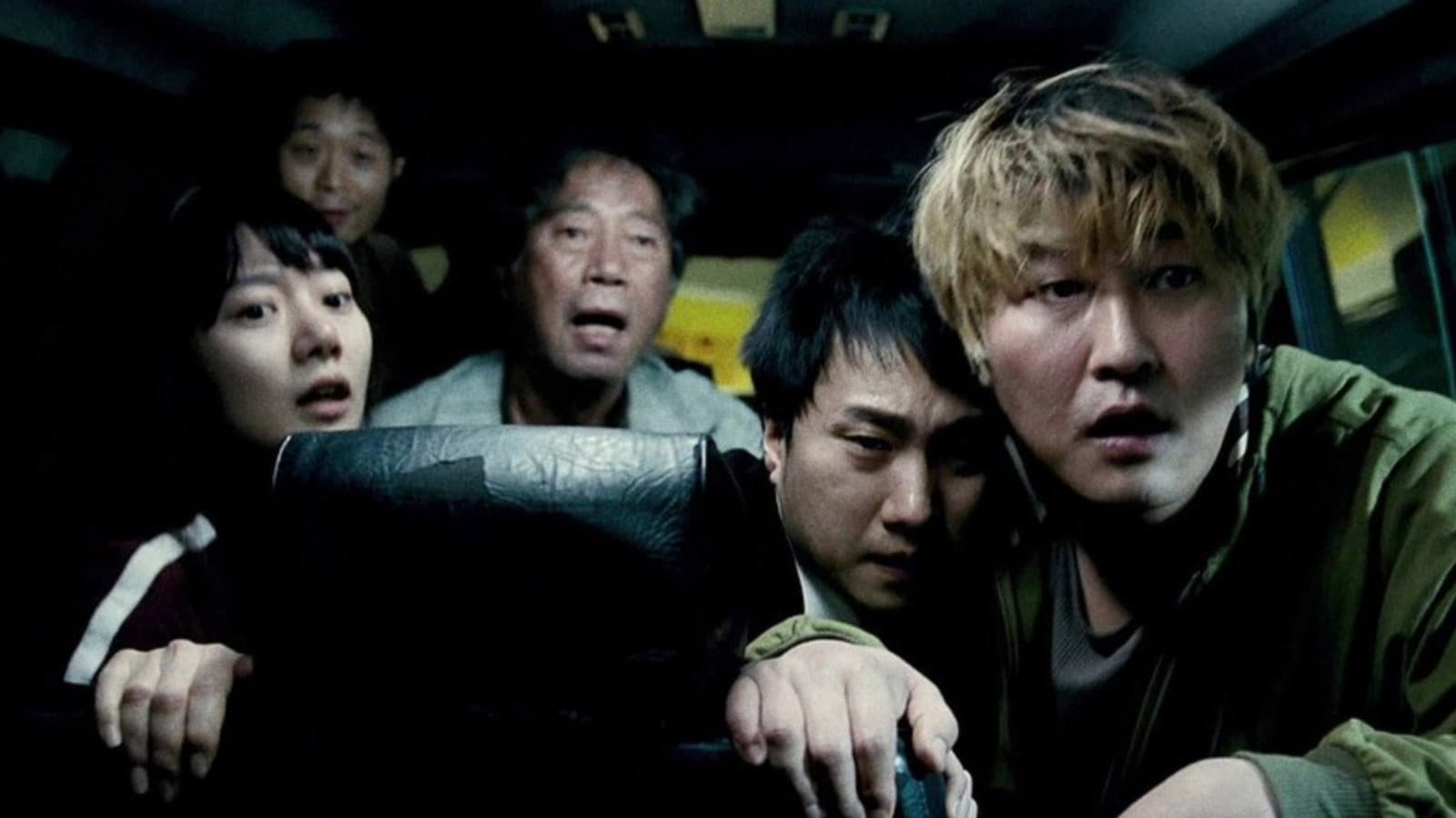
What truly elevates The Host above its peers is the family dynamic at its core. The Parks are not heroes in any traditional cinematic sense. Gang-du, the father played with sloppy warmth by Song Kang-ho (who would later star in Parasite), is a bumbling, narcoleptic snack bar operator widely regarded as a failure. His father is a well-meaning but ineffectual old man. His sister is a competitive archer struggling to make it professionally. His brother is an unemployed activist prone to grand gestures that go nowhere. Together, they form a portrait of a working-class family that South Korean society has largely left behind.
This is where Bong Joon Ho's genius becomes unmistakable. By grounding an outrageous monster movie premise in the very specific emotional reality of a struggling, imperfect family, he creates genuine stakes that no amount of CGI spectacle could manufacture on its own. When Hyun-seo is taken, you feel the grief because Bong has taken the time to make these characters human and messy and real. Their mourning scene — chaotic, ugly, and darkly comedic all at once — is one of the most emotionally complex sequences in any blockbuster film of the 2000s.
Social Commentary Wrapped in Monster Movie Clothing
Bong Joon Ho has never been shy about embedding political critique inside crowd-pleasing genre films, and The Host may be his sharpest example of this approach. The Korean government's response to the monster outbreak is depicted as a cascade of bureaucratic incompetence and deliberate misinformation. US military and government officials play a quietly sinister role, introducing a fictional chemical agent called "Agent Yellow" to combat the creature — a decision that proves to be as dangerous as the monster itself. Media coverage is sensationalist and misleading. The authorities quarantine and detain Gang-du based on false information rather than actually dealing with the threat.
All of this feels remarkably prescient in the post-COVID era, where audiences worldwide have lived through the experience of watching institutions fail to respond effectively to a large-scale threat while ordinary people bear the consequences. The Host anticipated those frustrations with uncanny accuracy, which is part of why it has only grown in critical reputation over the years.
How The Host Holds Up Against the Greatest Monster Films Ever Made
Comparing The Host to the benchmarks of the genre reveals just how much it accomplishes. Unlike many Hollywood creature features, the monster is revealed early and shown in broad daylight, a bold choice that forces the filmmaking craft to carry the weight rather than relying on shadow and suggestion. The creature design is inventive and deeply unsettling — a bottom-feeding river beast mutated into something that moves with horrible, unpredictable speed. Bong and his team were not afraid to let the audience see exactly what they were dealing with.
What sets it apart from contemporaries like Cloverfield or even the modern Godzilla reboots is the refusal to let spectacle substitute for substance. Every action sequence in The Host carries emotional and thematic weight. The film's climax, which subverts expectations in ways that feel both surprising and entirely earned, cements its place alongside classics like Jaws, Alien, and The Thing in any serious conversation about the best the genre has to offer.
What The Host Tells Us About Bong Joon Ho as a Filmmaker
Looking back at The Host through the lens of Parasite's success, the throughlines in Bong's work become crystal clear. The class anxiety, the institutional critique, the tragicomic family dynamics, the refusal to let any single genre define a film — all of it is present in full force in his 2006 masterwork. Song Kang-ho's casting alone tells a story: Bong trusted this actor with a vulnerable, comedic, physically demanding leading role years before they would collaborate on the film that conquered Hollywood.
For anyone who discovered Bong Joon Ho through Parasite and has not yet watched The Host, there is genuinely no better starting point for understanding how this filmmaker became one of the most important voices in world cinema. It is a monster movie, yes — but it is also a family drama, a political satire, a tragedy, and a quiet rebuke of every society that has ever let ordinary people down in a moment of crisis. In other words, it is exactly the kind of film that only Bong Joon Ho could make.
Where to Watch The Host
Availability shifts across streaming platforms depending on your region, but The Host is regularly available on services like Tubi, Shudder, and various digital rental platforms including Amazon Prime Video and Apple TV. Given its reputation as one of the defining genre films of the 21st century, it is well worth seeking out in the best quality version available. If you are a fan of intelligent, emotionally resonant science fiction that uses the spectacle of a monster to say something true about the world, The Host belongs at the very top of your watchlist.