
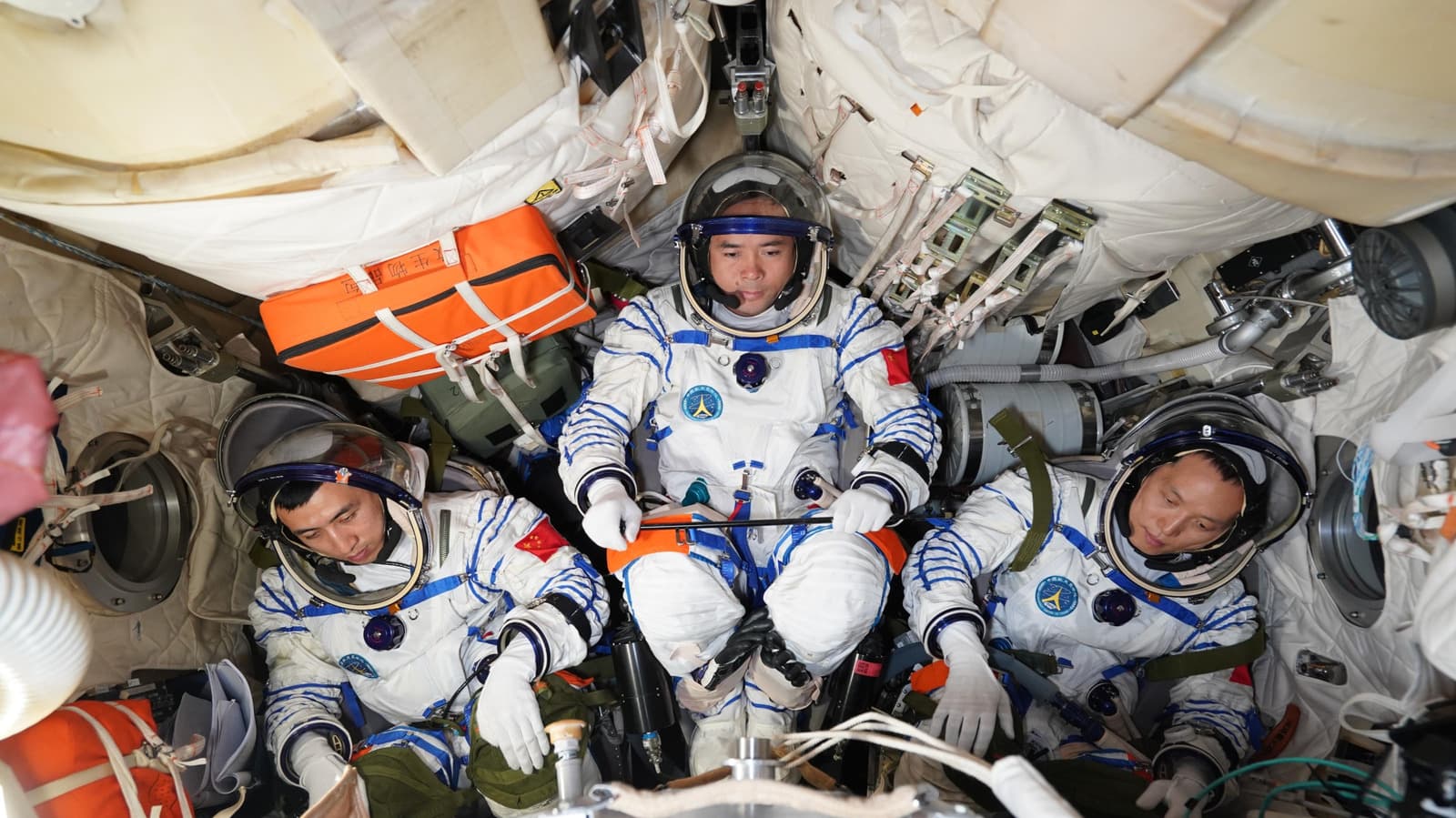
China's Rocket Launch Marks a Pivotal Moment in the Global Space Race
Space exploration has always been a measure of a nation's technological ambition, and China is making it abundantly clear that it intends to stand at the very top. A recent Chinese rocket launch has captured the attention of space agencies, scientists, and governments around the world — and for good reason. Far more than a routine mission into low Earth orbit, this launch represents a calculated and deliberate step toward one of the most audacious goals in modern space exploration: landing Chinese astronauts on the Moon by 2030.
While NASA prepares its Artemis program and private companies like SpaceX push the boundaries of commercial spaceflight, China's state-run space program — the China National Space Administration (CNSA) — is quietly, methodically, and effectively closing the gap. The latest rocket mission is not an isolated event. It is a link in a carefully engineered chain that connects present-day milestones to a future where China plants its flag on the lunar surface.
Understanding China's 2030 Lunar Ambition
China's goal of landing taikonauts — the term used for Chinese astronauts — on the Moon before the end of this decade is not new, but it is becoming increasingly credible with each successful mission. The country laid out its roadmap years ago, and step by step, it has been executing that plan with remarkable precision.
The 2030 project involves several key components working in concert:
- Next-generation crewed spacecraft: China has been developing a new-generation crew vehicle capable of carrying astronauts beyond low Earth orbit, designed specifically for deep-space missions to the Moon and potentially Mars.
- Heavy-lift rocket development: The Long March 10 rocket, China's answer to NASA's Space Launch System (SLS), is being developed to provide the massive thrust needed to send crewed missions to the Moon.
- Lunar lander technology: China has been testing and refining lander technology through its uncrewed Chang'e missions, building the experience necessary to safely deliver humans to the lunar surface.
- Lunar space station concepts: In partnership with Russia, China has proposed the International Lunar Research Station (ILRS), a long-term presence near the Moon that would support sustained exploration.
The recent rocket launch feeds directly into this ecosystem of development, testing critical systems and validating technologies that will be essential when the time comes for a crewed lunar mission.
Why Space Agencies Around the World Are Paying Attention
It would be a mistake to view China's lunar ambitions in isolation. The global space community is watching intently because China's progress is reshaping the geopolitics of space exploration in real time. When a new spacefaring power demonstrates credible capabilities beyond low Earth orbit, it changes the strategic calculus for every other nation with skin in the game.
NASA has openly acknowledged the competitive dimension of the new space race. Officials have noted that China's timeline for a crewed Moon landing is aggressive and that the United States must not become complacent. The Artemis program, which aims to return American astronauts to the Moon, has faced repeated delays and budget pressures, while China's program appears to be advancing on schedule.
Beyond the United States, the European Space Agency (ESA), Japan's JAXA, and India's ISRO are all monitoring China's moves carefully. Some of these agencies have partnerships with NASA and are watching to understand how Chinese capabilities might affect collaborative frameworks, resource competition near the Moon's south pole — a region rich in water ice — and the future governance of outer space activities.
The Technology Behind the Mission
China's recent rocket launch showcases more than national pride — it demonstrates genuine engineering advancement. The mission highlights the maturation of Chinese aerospace technology, which has progressed rapidly over the past two decades from early Shenzhou crewed missions to operating the Tiangong space station and conducting successful uncrewed Moon landings with the Chang'e program.
Key technological achievements that make the 2030 goal plausible include advancements in propulsion systems capable of deep-space transit, life support systems designed for long-duration missions, autonomous docking and rendezvous capabilities tested in Earth orbit, and precision landing guidance systems demonstrated during the Chang'e missions.
Each successful launch and mission adds empirical data, operational experience, and engineering confidence to China's growing portfolio of space capabilities. The most recent launch is one more data point in a trend line that points unmistakably toward the Moon.
What a Chinese Moon Landing Would Mean for the World
If China successfully lands astronauts on the Moon by 2030, the implications will extend well beyond the boundaries of space policy. It would mark the first time any nation other than the United States has placed humans on the lunar surface, a feat not accomplished since NASA's Apollo 17 mission in 1972. That would be an extraordinary geopolitical, scientific, and symbolic moment for humanity.
From a scientific standpoint, a Chinese crewed lunar mission could yield new data about the Moon's geology, resources, and suitability for long-term habitation. From a political standpoint, it would dramatically elevate China's standing on the world stage and validate decades of investment in its space program.
It could also accelerate international interest in Moon resource governance, particularly regarding who has the right to extract and use lunar resources — a question that existing treaties like the Outer Space Act of 1967 do not fully resolve.
The Road Ahead
China's recent rocket launch is not a destination — it is a waypoint. The 2030 project remains a formidable challenge, requiring flawless execution across multiple missions, technologies, and systems over the coming years. But with each launch, China demonstrates that its ambitions are grounded not just in aspiration, but in steadily growing capability.
The world is watching, and rightly so. The next great chapter of human space exploration may well be written in Mandarin.