
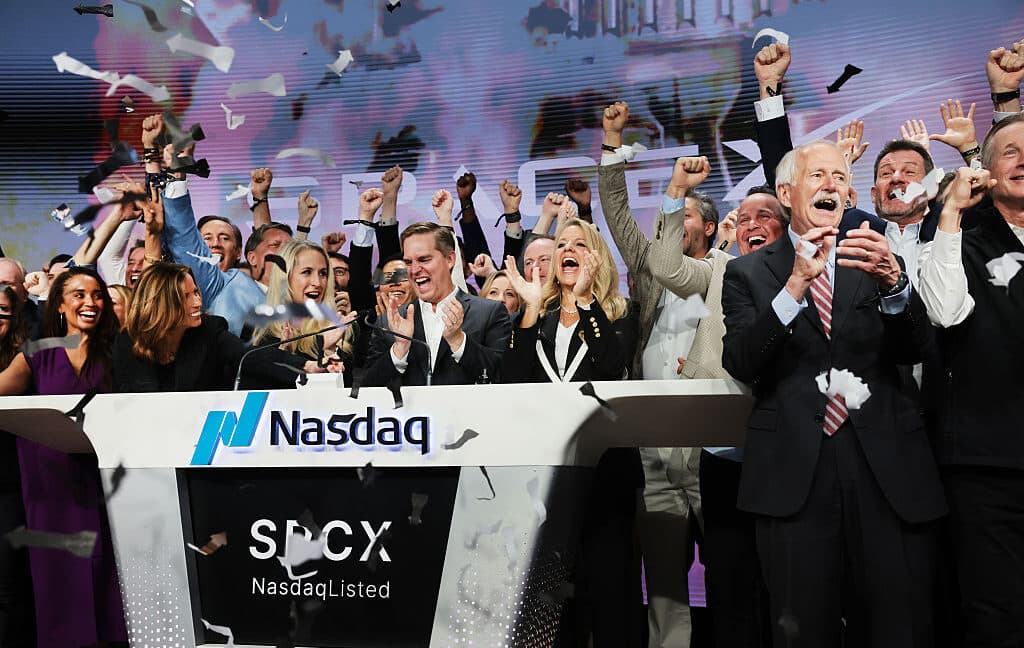
Chinese-Linked Investors Secretly Acquired SpaceX Stakes Before IPO
In the months leading up to SpaceX's highly anticipated initial public offering, a surprising and quietly troubling story was unfolding behind the scenes. According to a private investor list obtained by ProPublica, a businessman with documented ties to Chinese military contractors was among a group of overseas investors who had quietly acquired stakes in Elon Musk's rocket company while it was still privately held. The revelation has sent shockwaves through the national security and investment communities alike, raising urgent questions about how foreign capital — particularly from China — found its way into one of America's most strategically sensitive defense contractors.
What the Private Investor List Revealed
The ProPublica investigation uncovered a private investor list that sheds new light on the foreign ownership landscape of SpaceX prior to its public debut. The document identifies not only the Chinese-linked businessman but also an entity connected to the Qatari royal family as having taken a stake in the company. While Qatari investment in Western companies is not uncommon, it is the Chinese dimension of this story that carries the most significant implications for US national security.
SpaceX is no ordinary private company. It has built much of its business around sensitive government contracts, including the manufacturing and deployment of spy satellites on behalf of the Pentagon. The company operates at the intersection of commercial spaceflight and classified defense infrastructure, making its ownership structure a matter of considerable strategic importance to the United States government.
Is Chinese Investment in US Military Contractors Illegal?
One of the most important nuances in this story is a legal one: there is currently no outright ban on Chinese investment in US defense contractors. However, such investments are subject to heavy regulatory oversight, primarily through the Committee on Foreign Investment in the United States, better known as CFIUS. This interagency body is tasked with reviewing transactions that could result in foreign control of US businesses and assessing any potential national security risks those deals might pose.
The fact that no blanket prohibition exists does not mean these investments are without scrutiny. On the contrary, the US government has become increasingly vigilant about Chinese capital flowing into sectors considered critical to national security — aerospace, semiconductors, artificial intelligence, and defense manufacturing chief among them. Investigators and regulators have noted a pattern of what they describe as strategic investment by Chinese-linked entities designed not merely for financial returns, but to gain access to proprietary technologies and sensitive operational data.
SpaceX's Response: Barring China and Hong Kong From the IPO
In a move that speaks directly to the sensitivity of the issue, SpaceX took the unusual step of explicitly barring investors from China and Hong Kong from participating in its initial public offering. Bloomberg reported that the company cited "regulatory and compliance risks" as the reason for the exclusion — a carefully worded phrase that signals awareness of the legal and reputational minefield surrounding Chinese investment in defense-adjacent enterprises.
This decision is notable for several reasons. First, it represents a voluntary restriction that goes beyond what current law requires. Second, it signals that SpaceX leadership — and presumably legal and compliance teams — recognized that Chinese participation in the IPO would invite intense regulatory scrutiny and potential political backlash. Third, it raises an obvious follow-up question: if Chinese investors were excluded from the IPO itself, why were they able to acquire stakes in the company during its private phase?
The Broader Context: China's Investment Strategy in Sensitive Industries
The US government has for years alleged that China pursues a deliberate strategy of investing in sensitive American industries as part of a broader effort to acquire advanced technology, gather intelligence, and erode the technological edge that underpins US military superiority. This strategy, sometimes referred to as "civil-military fusion," involves blurring the line between civilian commercial enterprises and the Chinese military-industrial complex.
When a businessman with ties to Chinese military contractors acquires a stake in SpaceX — a company that builds rockets for the US military and operates classified satellite infrastructure — the concern is not merely theoretical. The worry is that such an investor could, intentionally or otherwise, serve as a conduit through which sensitive technical information flows back to entities that are adversarial to US interests.
What This Means for Future Foreign Investment in Defense Tech
The SpaceX case is likely to intensify an ongoing policy debate about how the United States regulates foreign investment in its most sensitive industries. Several key questions are now on the table:
- Should CFIUS review be mandatory for all foreign investments in defense contractors? Currently, certain smaller or minority-stake investments can fall below the threshold that triggers automatic review.
- Should there be an explicit ban on Chinese investment in companies holding US defense contracts? Legislators have previously introduced bills targeting Chinese investment in specific sectors, and this story may reinvigorate those efforts.
- How should private companies self-regulate? SpaceX's decision to exclude Chinese investors from its IPO demonstrates that companies themselves can take proactive steps, but voluntary measures are inconsistent by nature.
Elon Musk, SpaceX, and the National Security Spotlight
The revelations place Elon Musk and SpaceX under renewed scrutiny at a particularly sensitive moment. SpaceX's expanding role in US national security — from Starlink communications satellites to classified Pentagon missions — makes it a company whose ownership and investor base carry real strategic weight. As the company transitions from private to public, transparency around who owns what and how those stakes were acquired will only become more critical.
The coming weeks are likely to bring additional reporting, potential congressional inquiries, and possibly regulatory action as authorities work to understand the full scope of Chinese-linked investment in SpaceX. For investors, policymakers, and national security professionals, this story serves as a timely reminder that in the intersection of finance and defense, due diligence is not just a fiduciary obligation — it is a matter of national interest.
Conclusion
The disclosure that Chinese-linked investors quietly acquired stakes in SpaceX before its IPO is more than a financial footnote. It is a window into the complex and often opaque world of foreign investment in America's defense-industrial base. As SpaceX moves into the public markets and its government role continues to grow, the story of how it was quietly funded — and by whom — will remain a critical chapter in the broader debate over economic security, national defense, and the limits of open markets in an era of strategic competition.