
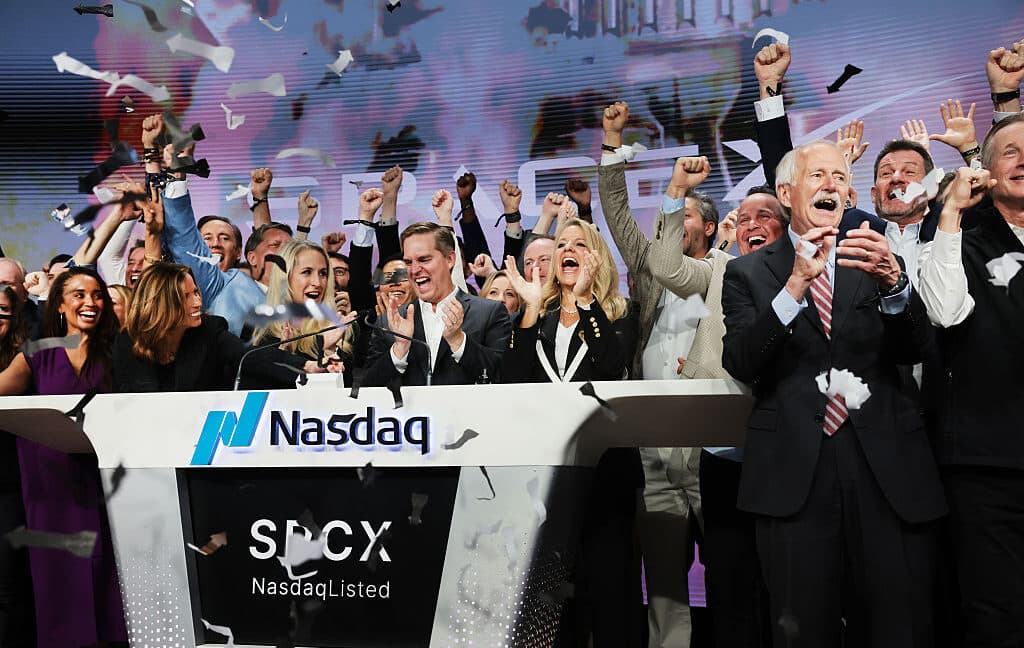
Chinese Investors Secretly Acquired SpaceX Stakes Before IPO
Long before SpaceX made headlines with its highly anticipated initial public offering, a quieter and far more controversial story was unfolding behind closed doors. According to a private investor list obtained by ProPublica, several overseas investors — including a businessman with documented ties to Chinese military contractors — had already acquired stakes in Elon Musk's rocket company while it was still privately held. The revelations have reignited intense scrutiny over foreign investment in US defense and aerospace technology, particularly from China.
Who Were the Secret Investors?
The investor list uncovered by ProPublica paints a nuanced and troubling picture of who managed to buy into one of the most strategically significant private companies in American history. Among the most notable names is a Chinese businessman with known connections to military contractors in China — a detail that raises immediate red flags given SpaceX's deep involvement in sensitive US government programs.
But the Chinese connection was not the only eyebrow-raising revelation. An entity linked to the Qatari royal family was also identified as having taken a stake in the company. While the Qatari investment carries different geopolitical implications, it underscores a broader pattern: powerful foreign interests were quietly positioning themselves inside a company that sits at the intersection of commercial space travel and American national security.
Why SpaceX Is Such a Sensitive Case
SpaceX is not your average technology startup. The company has built its business on the back of sensitive US government contracts, including classified work making spy satellites for the Pentagon. It operates launch vehicles used by the US military, provides services to NASA, and plays a central role in America's broader space defense strategy. This makes the question of who holds financial stakes in SpaceX far more loaded than it would be for an ordinary private company.
While there is currently no outright legal ban on Chinese entities investing in US military contractors, such investment is subject to heavy regulatory oversight. The Committee on Foreign Investment in the United States (CFIUS) exists precisely to review transactions that could give foreign actors meaningful access to sensitive technology, intellectual property, or strategic infrastructure. The fact that Chinese investors were able to acquire SpaceX stakes without triggering visible regulatory intervention has raised serious questions about whether oversight mechanisms are functioning as intended.
SpaceX Bars China and Hong Kong Investors From Its IPO
In what appears to be a direct acknowledgment of the political and regulatory sensitivity surrounding this issue, SpaceX took a notable step when it finally moved toward its public offering. According to reporting by Bloomberg, the company barred investors from China and Hong Kong from participating in its IPO, citing "regulatory and compliance risks."
This decision was not made in a vacuum. It signals that SpaceX's leadership — and almost certainly its legal and compliance teams — are acutely aware of how foreign ownership stakes in the company could complicate its government contracts, its security clearances, and its public image. Choosing to exclude Chinese and Hong Kong-based investors from the IPO process is a significant move that effectively draws a line between the company's opaque private-market past and the more scrutinized reality of being a publicly traded company.
The Broader National Security Context
The US government has been increasingly vocal about what it describes as a deliberate Chinese strategy to use foreign investments in sensitive American industries as a tool for espionage and technology acquisition. Intelligence agencies have warned that even minority investment stakes can provide Chinese state-affiliated actors with opportunities to access proprietary data, influence corporate decision-making, or simply gain visibility into cutting-edge technological developments.
SpaceX is a particularly high-value target in this context. Its Starlink satellite network, its Falcon and Starship launch vehicles, and its involvement in classified Pentagon programs all represent technology that would be extraordinarily valuable to a foreign military or intelligence apparatus. The idea that individuals with ties to Chinese military contractors held financial stakes in the company, even briefly or indirectly, is the kind of scenario that national security professionals lose sleep over.
What This Means for Regulatory Reform
The SpaceX case is likely to accelerate ongoing conversations in Washington about whether current foreign investment regulations are adequate for the realities of modern private capital markets. Sophisticated foreign investors have long understood that private companies — especially high-growth technology firms — can operate with far less transparency than their publicly traded counterparts. The disclosure requirements, reporting obligations, and CFIUS review triggers that apply to public market transactions do not always extend cleanly into the private investment ecosystem.
- Lawmakers may push for expanded CFIUS jurisdiction over private-market transactions involving defense-adjacent companies.
- Regulators could mandate more rigorous disclosure requirements for private firms holding government security clearances.
- The SpaceX case may serve as a benchmark for how investment screening policies are updated in an era of dual-use technology.
A Company at the Crossroads of Commerce and National Security
Elon Musk's SpaceX has always occupied an unusual position in the American industrial landscape — part Silicon Valley disruptor, part defense contractor, and increasingly a geopolitical actor in its own right. The revelation that Chinese investors with military ties quietly acquired stakes in the company before its IPO crystallizes just how complicated that position has become.
As SpaceX transitions into a publicly traded entity and faces far greater scrutiny from regulators, shareholders, and the public, the questions raised by this investor list will not disappear. If anything, they will intensify. The story of who got into SpaceX — and how — is now inseparable from the larger story of how America protects its most strategically vital technologies in an era of intensifying great-power competition.
For investors, policymakers, and national security watchers alike, this is a story worth following closely as it continues to develop.