
FCC Eases Drone Rules, But DJI Drones Remain Grounded in the US
The United States government has taken a small but notable step back from its sweeping crackdown on foreign-made drones, with the Federal Communications Commission (FCC) quietly removing a narrow category of imported "toy drones" from its so-called Covered List. For drone enthusiasts and casual hobbyists, this might initially sound like welcome relief. But before anyone rushes to order a new DJI Mini or Mavic, there is a critical catch: the new exemption is so tightly defined that virtually every popular consumer drone on the market — including DJI's smallest and most affordable models — still does not qualify.
The move marks the first significant exception the FCC has introduced since it began aggressively restricting foreign drone technology in early 2025, and it signals a more nuanced approach to the blanket ban. However, the strict eligibility criteria make clear that policymakers are not yet ready to open the door to Chinese drone manufacturers like DJI, which continues to dominate global consumer drone sales.
What Is the FCC Covered List and Why Does It Matter?
The FCC's Covered List is a regulatory tool used to identify communications equipment deemed to pose an unacceptable risk to US national security. Once a product or manufacturer lands on this list, it becomes extremely difficult — and in many cases impossible — for those devices to be legally sold, imported, or operated in the United States. DJI, the world's largest drone manufacturer and a Chinese-owned company, has been firmly placed on this list, effectively shutting it out of the American market for commercial and consumer use.
The crackdown reflects broader US-China tensions over technology, data privacy, and national security. Concerns have been raised that drones made by Chinese companies could potentially be used to collect sensitive data and transmit it back to China, or that the technology could be leveraged in ways that compromise US infrastructure or military operations. DJI has consistently denied these allegations, but US regulators have remained unmoved.
The New Exemption: What Qualifies?
The FCC's latest action carves out a very specific and limited exemption for foreign-made toy drones that meet a strict set of criteria. To qualify for removal from the Covered List — and thus be eligible for sale and use in the US — a drone must satisfy all of the following conditions:
- It must be lightweight, falling below a defined weight threshold that places it firmly in the toy category rather than the prosumer or commercial space.
- It must have no GPS capability whatsoever, meaning it cannot track or record its own location or the location of its operator.
- It must have no internet connectivity, eliminating any possibility of real-time data transmission to external servers or cloud platforms.
- It must be completely free of cameras and sensors, meaning it cannot capture images, video, or environmental data of any kind.
- It must offer no more than ten minutes of total flight time, capping its practical utility well below even the most entry-level recreational drones.
In practical terms, this describes a device that is little more than a flying toy with no smart features, no recording capabilities, and extremely limited range and endurance. It is a far cry from the sophisticated, camera-equipped drones that have made DJI a household name among photographers, videographers, inspectors, and hobbyists around the world.
Why DJI Drones Still Don't Make the Cut
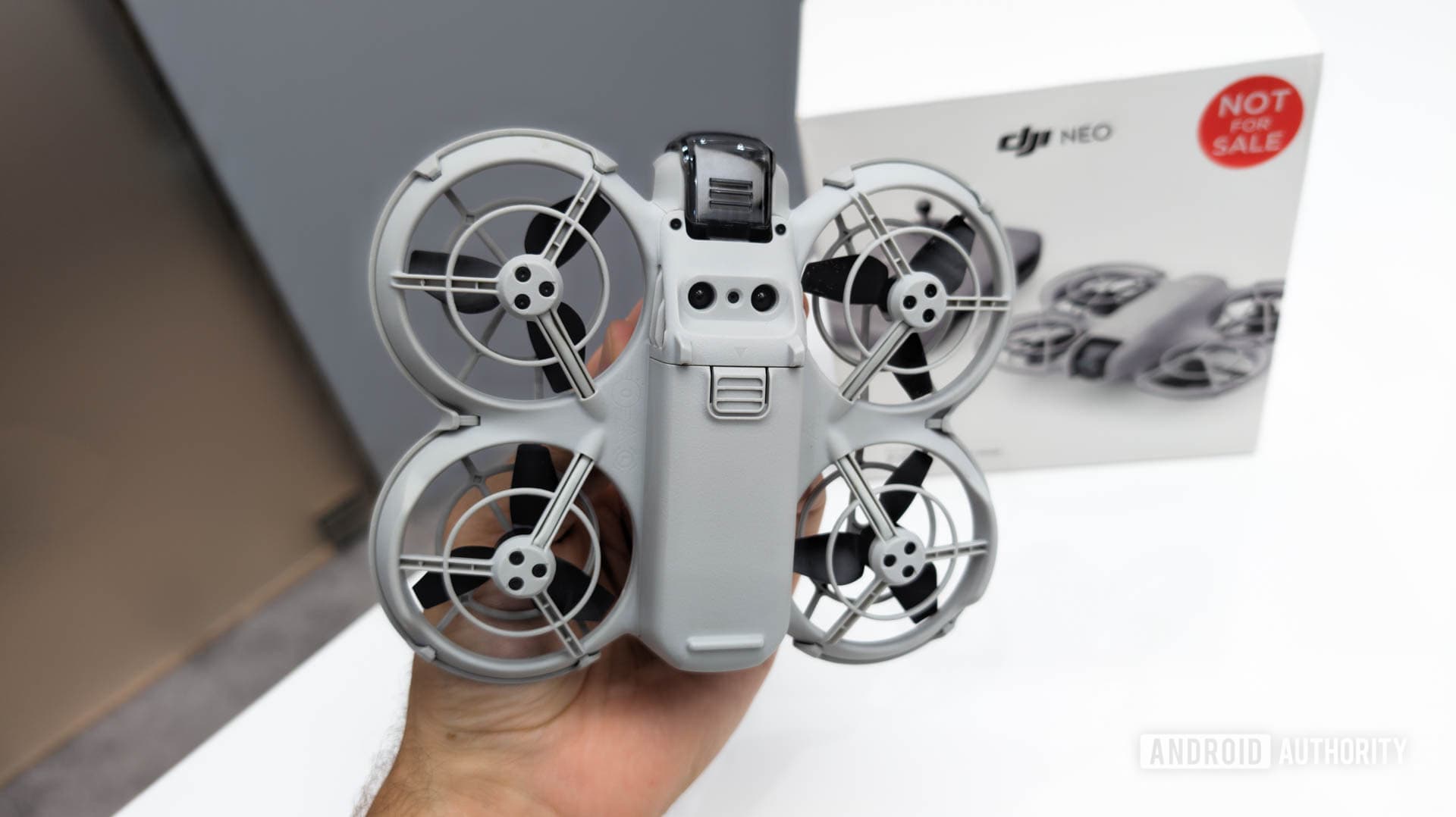
DJI's lineup, even at the entry level, is built around features that the FCC exemption explicitly prohibits. The DJI Neo, for instance, is one of the company's most compact and beginner-friendly drones, yet it comes equipped with a camera, onboard sensors, GPS positioning, and well over ten minutes of flight time. The DJI Mini 4K and DJI Mini 4 Pro — both marketed as lightweight, accessible options for casual users — similarly feature cameras, GPS, and app connectivity that would immediately disqualify them under the new rules.
In other words, the features that make DJI drones worth buying are the exact features the FCC is targeting. Stripping out the camera, GPS, sensors, and connectivity from a DJI drone would essentially leave consumers with a product that offers none of the value DJI is known for delivering.
The Broader Impact on the US Drone Market
The ongoing exclusion of DJI from the US market has had ripple effects across multiple industries. Real estate photographers, filmmakers, agricultural inspectors, search and rescue teams, and infrastructure surveyors have all relied heavily on DJI hardware for years. With those products off the table, American businesses and consumers have been forced to look at alternatives from companies like Skydio, Autel Robotics, and other non-Chinese manufacturers — many of which carry significantly higher price tags or offer fewer features for the money.
Some industry advocates have pushed back against the restrictions, arguing that the data security concerns are overstated and that the practical cost to American businesses is substantial. Others support the crackdown as a necessary step in protecting national security and reducing dependence on Chinese-made technology in critical sectors.
What This Means for Consumers Going Forward
For everyday consumers and hobbyists hoping to fly a DJI drone in the US, the situation remains largely unchanged. The FCC's new exemption is meaningful in principle — it shows that the agency is willing to consider product-specific exceptions rather than applying a blanket ban to every foreign drone regardless of capability — but its narrow scope means it has virtually no practical impact on the drones most people actually want to buy.
Until regulators are willing to draw clearer lines around legitimate security concerns versus general-purpose consumer hardware, DJI and similar manufacturers will continue to find themselves locked out of one of the world's largest consumer markets. The FCC has opened a small crack in the door, but for DJI, that door remains firmly closed.
Final Thoughts
The FCC's decision to exempt a narrow class of toy drones from its Covered List is a small sign of regulatory flexibility in an otherwise rigid policy environment. It suggests that a strictly product-by-product approach to drone regulation may be possible, which could eventually benefit more sophisticated devices if the political and security landscape shifts. For now, though, anyone looking to buy or fly a DJI drone in the US will need to keep waiting — or start looking seriously at the alternatives. The FCC has taken one small step, but DJI remains grounded.