
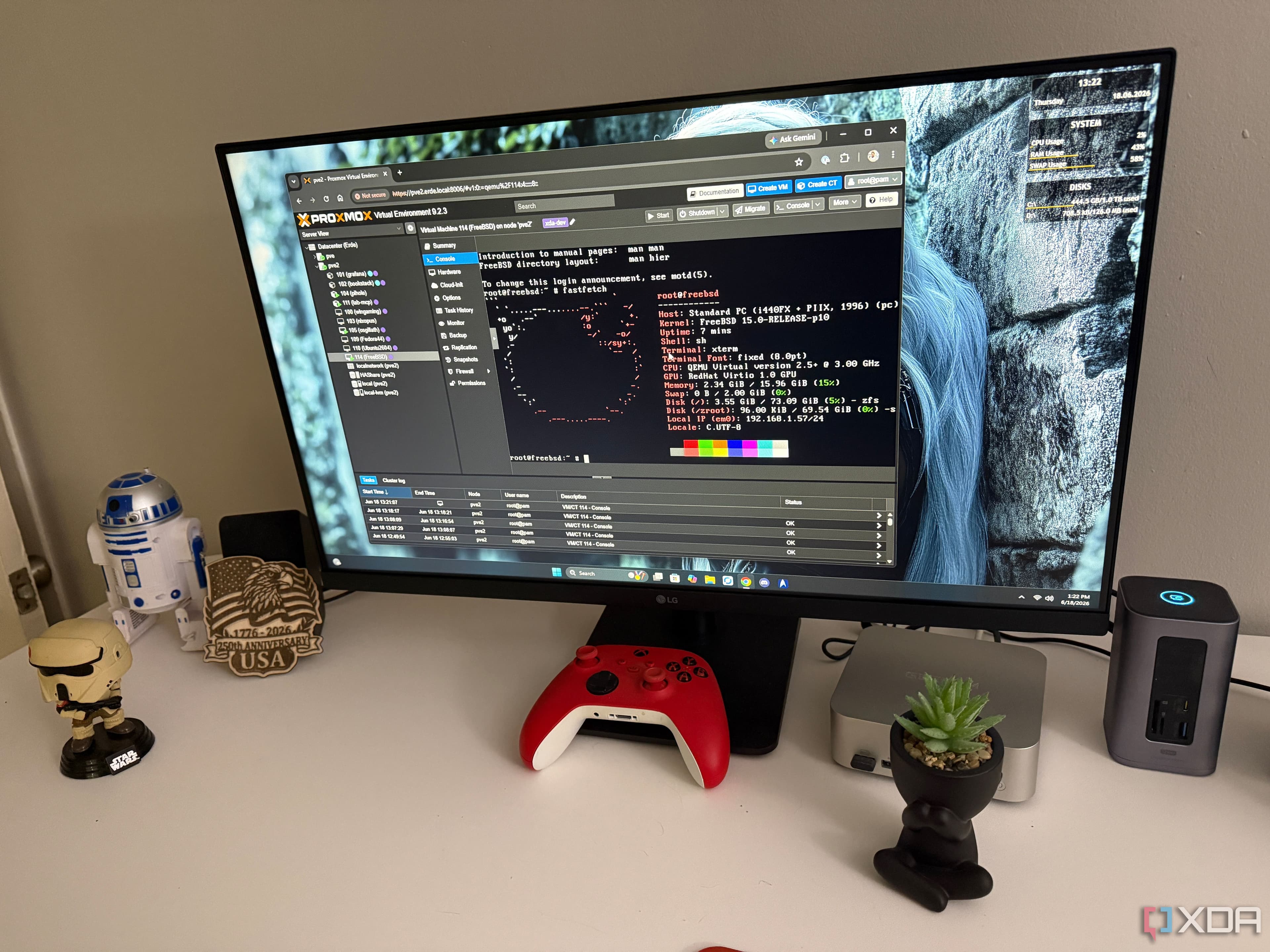
FreeBSD 15 and the Quiet Power of Doing Less
There is a certain kind of software that never tries to impress you. It does not greet you with a redesigned interface every eighteen months or nudge you toward a subscription tier buried inside a settings menu. FreeBSD 15 is that kind of software. It will not win a screenshot contest, it will not trend on social media, and it will not ask you to rate your experience on a scale of one to ten. What it will do is work — reliably, predictably, and without much drama. In a technology landscape that increasingly confuses novelty with progress, that posture feels almost radical.
What FreeBSD 15 Actually Is
FreeBSD is a free, open-source Unix-like operating system descended from the Berkeley Software Distribution, or BSD. Unlike the many Linux distributions that dominate conversations about open-source operating systems, FreeBSD is developed as a complete, unified system rather than a kernel paired with separately maintained user-space tools. This architectural difference matters more than it might initially seem. The operating system is built and maintained as a coherent whole, which means its components are designed to work together from the start rather than assembled from upstream projects with varying release cycles and philosophies.
FreeBSD 15 continues that tradition with updates to its networking stack, improvements to its ZFS integration, expanded hardware support, and refinements to its toolchain. None of these headlines will get your pulse racing the way a flashy new desktop environment might, but they represent exactly the kind of deep, systemic work that determines whether a system you depend on stays dependable over time.
The Case for Deliberate Restraint
Much of what makes modern operating systems exhausting to follow is the sheer relentlessness of their ambition. Major platforms have spent the last decade turning their operating systems into storefronts, social layers, and AI showcases. Even Linux distributions, which once prided themselves on user control and transparency, increasingly ship with opinionated defaults, mandatory telemetry toggles, and desktop environments that seem designed more for marketing videos than for daily work.
FreeBSD takes a different approach. It is deliberate about its scope and stubborn about its identity. It wants to be an excellent server and workstation operating system. It wants its networking to be fast and correct. It wants its storage layer to be robust. It wants its security model to be principled. It is not trying to be an ecosystem or a platform or an experience. That restraint is not a failure of imagination. It is a statement about what the project believes software should be.
Who Actually Uses FreeBSD and Why
FreeBSD powers a significant portion of the infrastructure you use every day without realizing it. Netflix has historically relied on FreeBSD to serve a large share of its streaming traffic. Sony's PlayStation consoles run a modified version of FreeBSD. WhatsApp used it to handle enormous message volumes before and after its acquisition. These are not hobbyist use cases. They are organizations with extreme reliability requirements choosing an operating system precisely because it does not surprise them.
Developers and system administrators who use FreeBSD as a workstation or personal system often cite similar reasons. The ports and packages system gives access to a wide range of software without sacrificing the cleanliness of the base system. The documentation, particularly the FreeBSD Handbook, is among the best in any open-source project. The upgrade path between major versions is deliberate and well-communicated. These qualities compound over time into something genuinely valuable: an operating system you trust.
FreeBSD 15 vs Linux: A Fair Comparison
Comparing FreeBSD to Linux is not entirely straightforward because Linux is a kernel, not an operating system, and the distributions built around it vary enormously. That said, some meaningful differences are worth understanding if you are considering FreeBSD as a daily driver or server platform.
- Licensing: FreeBSD uses the permissive BSD license, which allows companies to use and modify the system without releasing their changes. Linux uses the GPL, which generally requires derivative works to be shared. This is one reason companies like Sony have historically favored FreeBSD for commercial products.
- Coherence: Because FreeBSD develops the kernel and user space together, the system behaves more consistently than a typical Linux distribution built from multiple upstream sources. Updates and upgrades tend to feel more predictable.
- ZFS integration: FreeBSD has offered native, first-class ZFS support for years. While Linux has OpenZFS available, ZFS on FreeBSD is more tightly integrated and has historically been better supported for production use.
- Hardware support: Linux generally supports a wider range of consumer hardware, particularly newer laptops and graphics cards. FreeBSD is excellent for server hardware and well-supported workstation configurations but may require more effort on cutting-edge consumer devices.
Is FreeBSD 15 Right for You?
If you are looking for an operating system to run a server, a firewall, a NAS, or a development workstation on stable, well-supported hardware, FreeBSD 15 deserves serious consideration. The learning curve is real. Concepts like jails, the ports tree, and the rc.conf configuration system take time to absorb if you are coming from a Linux background. But the investment pays off in the form of a system that behaves consistently, upgrades predictably, and does not treat every release as an opportunity to rethink its identity.
If you are a desktop user who wants out-of-the-box support for the latest hardware, seamless GPU drivers, and a curated application ecosystem, FreeBSD will ask more of you than most modern Linux distributions. That is an honest tradeoff, not a criticism of the project.
The Bigger Point About Boring Software
FreeBSD 15 is a reminder that the most valuable software is not always the most exciting software. Stability is a feature. Predictability is a feature. An upgrade process that does not break your configuration is a feature. Documentation that actually explains what the system is doing is a feature. These qualities do not photograph well, but they are what determines whether a system earns your long-term trust.
In a moment when every platform is competing for attention, there is something genuinely refreshing about software that is calm, deliberate, and almost stubborn about what it wants to be good at. FreeBSD 15 has no interest in winning you over with spectacle. It would rather earn your trust with consistency. For a growing number of users and organizations, that is exactly the right trade.