
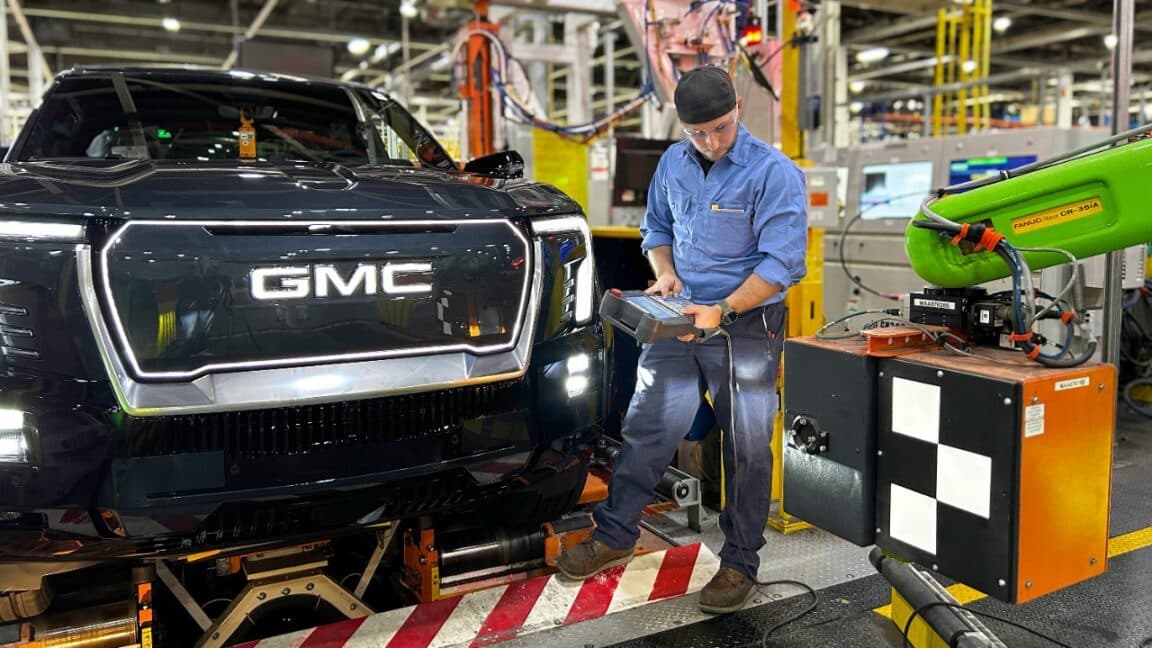
GM Installs Robots at Factory Zero While Over 1,300 Workers Remain on Indefinite Layoff
General Motors is doubling down on automation at its flagship electric vehicle facility in Detroit — and the timing could not be more controversial. While more than 1,000 United Auto Workers (UAW) members continue to sit at home following what was described as a temporary layoff back in March, the automaker has quietly installed approximately 50 new robot arms on the Factory Zero assembly floor. The move has ignited fresh tension between one of America's largest automakers and the union that represents its workforce, raising deeply uncomfortable questions about the future of human labor in the age of electric vehicles.
What Is Happening at GM's Factory Zero?
Factory Zero, GM's landmark EV manufacturing plant located in Detroit, Michigan, is at the center of a growing labor dispute. According to reporting by Crain's Detroit Business, General Motors installed roughly 50 robotic arms manufactured by FANUC, a Japanese robotics company widely regarded as one of the world leaders in industrial automation technology. These robotic systems are specifically designed to assist in attaching various components to vehicles as they move through the assembly line — tasks that have historically been performed by skilled human workers.
The installation itself is not entirely surprising in the context of a broader industry push toward automation. However, what has sparked outrage among union leadership is the fact that these robots have arrived on the factory floor at the very same time that over 1,300 GM employees are still waiting to be called back from a layoff that was explicitly described to them as temporary. That promise, union officials argue, now feels hollow.
The UAW's Response: Anger and Alarm
James Cotton, president of UAW Local 22, has been among the most vocal critics of GM's decision. Speaking to The Detroit News, Cotton confirmed that more than 1,000 union members are currently classified as "laid off indefinitely" — a classification that represents a significant and troubling escalation from the original framing of a short-term production pause. Cotton made the union's position plain: GM could and should be recalling those workers rather than deploying machines to take on the work they once performed.
The UAW's frustration reflects a broader and increasingly urgent conversation happening across the American manufacturing sector. For autoworkers in particular, automation is not an abstract concern — it is an immediate and tangible threat to their livelihoods. Every robot arm installed on a line like the one at Factory Zero represents a set of human hands that will not be needed, at least not for those specific tasks. When that automation happens against the backdrop of a mass layoff, it sends an unmistakable message about where a company's priorities lie.
Why Automakers Are Accelerating Automation
To understand GM's decision, it helps to look at the competitive pressures bearing down on legacy automakers as they attempt to transition from internal combustion engine vehicles to EVs. Electric vehicles have fundamentally different assembly requirements compared to traditional cars. They involve fewer moving parts, different component integration challenges, and dramatically different production economics. For manufacturers trying to cut costs and improve margins in a market increasingly dominated by Tesla and aggressive Chinese EV brands, automation offers an appealing solution.
FANUC, the company whose robots GM has installed at Factory Zero, is a globally recognized leader in this space. Its robotic systems are deployed in manufacturing facilities around the world, prized for their precision, speed, and reliability. For an automaker racing to make EV production economically viable at scale, the appeal of deploying these systems is clear — even if the human cost is significant.
The Bigger Picture: A Defining Moment for Auto Labor
What is unfolding at Factory Zero is not an isolated incident. It is a microcosm of one of the most consequential labor debates of our time. Across the United States and around the world, manufacturing workers are grappling with the reality that technological advancement — however economically beneficial for corporations — can come at a steep personal cost to those whose skills and experience are being automated away.
For the UAW, the stakes could not be higher. The union fought hard during its landmark 2023 contract negotiations with the Detroit Three automakers — GM, Ford, and Stellantis — to secure protections related to EV transition and job security. The events at Factory Zero suggest that the tension between those hard-won agreements and the relentless march of automation is far from resolved.
Key Facts at a Glance
- Approximately 50 FANUC robot arms have been installed at GM's Factory Zero plant in Detroit.
- More than 1,300 workers were laid off in March in what was described as a temporary measure.
- Over 1,000 UAW members remain on indefinite layoff as of the latest reports.
- UAW Local 22 President James Cotton has publicly stated that recalled workers could perform the roles now assigned to the new robots.
- Factory Zero is GM's flagship facility for manufacturing electric vehicles, including the GMC Hummer EV and Chevrolet Silverado EV.
What Comes Next?
The standoff between GM and the UAW over Factory Zero is likely to intensify in the weeks and months ahead. Union leaders have signaled they are not prepared to accept the situation quietly, and the broader public narrative around corporate automation decisions — particularly when they come at the expense of working-class families — carries significant political weight in a state like Michigan.
For workers still waiting by the phone for a recall that may never come, the sight of robot arms moving along the line where they once stood is more than a labor dispute. It is a preview of a future the auto industry is moving toward with remarkable speed — one that will require honest, urgent, and difficult conversations between corporations, unions, policymakers, and the workers whose lives hang in the balance.
The question now is not simply whether GM has the right to automate its factories. It is whether a company can make promises to its workforce, break those promises in practice, and face meaningful consequences — or whether the march of automation will continue largely unchecked, one robot arm at a time.