
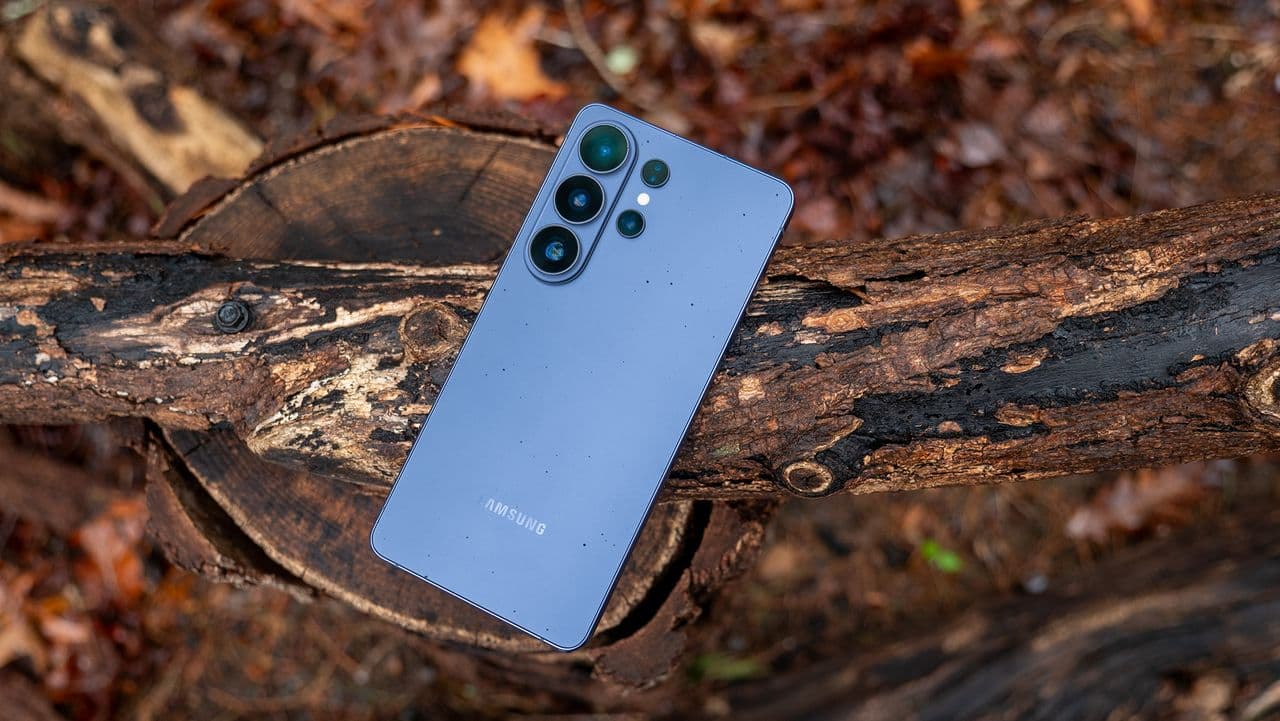
Samsung UFS 5.0: The Storage Upgrade That Could Redefine What Your Phone Can Do
Storage technology rarely steals headlines, but Samsung's latest announcement is hard to ignore. The South Korean tech giant has officially unveiled UFS 5.0, the next generation of Universal Flash Storage designed for mobile devices — and it is not a modest incremental update. With read speeds pushing up to 10.8 GB/s, a dramatic leap in power efficiency, and a focused push to accelerate on-device artificial intelligence, UFS 5.0 is shaping up to be one of the most consequential hardware advances in smartphones over the next few years. Samsung has set its sights on mass production by Q4 2026, meaning flagship phones arriving in early 2027 could be the first to carry this technology to consumers' pockets.
What Exactly Is UFS 5.0?
UFS, or Universal Flash Storage, is the internal storage standard used in virtually every modern Android smartphone. It governs how quickly your device can read data — like loading an app or opening a large photo — and write data, such as saving a video or downloading a file. Each generation of UFS has pushed those ceilings higher, and UFS 5.0 represents the most aggressive jump yet.
Samsung's UFS 5.0 achieves read speeds of up to 10.8 GB/s and write speeds of up to 9.5 GB/s. To put that in perspective, Samsung describes these figures as roughly twice as fast as the current UFS 4.1 standard — the very storage solution found inside devices like the OnePlus 15. Double the speed is not a marginal improvement; it is a generational shift that will be felt across everything from app launch times to media playback, file transfers, and beyond.
The Numbers That Matter: Speed, Efficiency, and Size
Raw throughput is only part of the UFS 5.0 story. Samsung has simultaneously addressed two of the most critical concerns in modern mobile hardware design: power consumption and physical footprint.
Power efficiency with UFS 5.0 has improved by more than 40% compared to the UFS 4.1 solution. In practical terms, this means your phone's storage is doing significantly more work while drawing less energy from the battery — a combination that directly translates into longer screen-on time and a cooler-running device. As smartphones take on increasingly intensive AI workloads, every watt saved by storage hardware becomes meaningful.
On the size front, Samsung has managed to reduce the physical dimensions of its UFS 5.0 module by approximately 16.7% compared to its predecessor. That might sound like a minor engineering footnote, but it carries real-world implications. Thinner flagship phones remain firmly on the table. More importantly, the reduced footprint opens the door for UFS 5.0 to find its way into wearables and extended reality (XR) devices — product categories where space is brutally constrained and every cubic millimeter of saved room is valuable.
On-Device AI Is the Real Target
If there is one theme dominating the smartphone industry in 2025 and beyond, it is on-device artificial intelligence. From real-time language translation to generative image editing, AI features are increasingly being processed locally on the phone rather than relying on cloud servers. This shift demands not only powerful processors but also storage that can keep up with the massive data throughput these models require.
Samsung is explicitly positioning UFS 5.0 as an AI-optimized storage solution. The company states that UFS 5.0 facilitates "much faster storage and processing of large data" for on-device AI applications. Critically, this includes reduced latency and quicker response times from large language models (LLMs) — the AI engines powering features like on-device chat assistants, smart photo organization, and predictive text generation.
Latency in this context is not just about speed; it is about the perceived fluidity and intelligence of your phone's AI features. When a language model running locally on your device can access and process data faster, responses feel more natural and instantaneous. UFS 5.0's architecture is designed to remove storage bottlenecks that currently slow down these interactions, even on phones with cutting-edge processors.
What Devices Will Benefit First?
Samsung has confirmed that UFS 5.0 is primarily targeting flagship smartphones. With mass production scheduled for Q4 2026, the most likely candidates to feature this storage first are the devices Samsung and other Android manufacturers plan to launch in early-to-mid 2027. Given that Samsung's Galaxy S series typically launches in January or February, a Galaxy S27 series debut for UFS 5.0 is a plausible and exciting prospect.
Beyond phones, the expanded application list is notable:
- Wearables: Smartwatches and fitness trackers running more complex AI health monitoring could benefit significantly from a smaller, more efficient storage chip.
- XR Devices: Mixed reality and augmented reality headsets require rapid data access to render immersive environments in real time, making UFS 5.0's speed gains especially relevant.
- Mid-Range Phones: While Samsung is initially targeting flagships, UFS 5.0's efficiency improvements could eventually make it viable for premium mid-range devices as manufacturing costs normalize.
Samsung has also confirmed that UFS 5.0 will be available in storage capacities of up to 1TB, ensuring it can meet the growing storage appetite of power users, content creators, and AI-heavy applications alike.
How Does UFS 5.0 Compare to What Came Before?
To appreciate the magnitude of this upgrade, it helps to look at the progression of UFS standards over recent years. UFS 3.1, which powered many 2021-era flagships, delivered sequential read speeds in the range of 2.1 GB/s. UFS 4.0 pushed that closer to 4.2 GB/s when it arrived in 2022, and UFS 4.1 has nudged those figures higher still. UFS 5.0's 10.8 GB/s read figure represents a roughly five-fold improvement over UFS 3.1 and a doubling of today's best-in-class mobile storage. That is a remarkably steep performance curve compressed into just a few years.
Samsung's Broader Strategy
The announcement of UFS 5.0 is part of Samsung's wider ambition to lead the mobile hardware ecosystem in the AI era. By owning both the semiconductor and consumer device sides of the equation, Samsung has a unique ability to optimize how its storage chips integrate with the processors and software in Galaxy devices. Announcing UFS 5.0 in June 2026 with a Q4 production target gives partners and competitors alike clear visibility into the roadmap, positioning Samsung as the standard-setter for the next wave of AI-capable smartphones.
For consumers, the takeaway is straightforward: the phones arriving in 2027 are going to feel meaningfully faster, smarter, and more capable — not just because of new chips or better cameras, but because the storage underpinning everything is finally catching up to the ambitions of modern mobile AI. Samsung's UFS 5.0 may be an invisible component, but its impact on your daily experience will be anything but.