
UK Social Media Ban for Under-16s: Everything You Need to Know
The UK government has made a landmark decision that is set to reshape how young people interact with the internet. From Spring 2027, children under the age of 16 will be banned from accessing certain social media platforms across the United Kingdom. It is one of the most significant pieces of online safety legislation the country has seen, and it has sparked a wave of debate among parents, educators, tech companies, and young people alike.
Whether you welcome the move or have reservations about it, there is a lot to unpack. In this article, we break down what the UK social media ban for under-16s actually means, which platforms are affected, when it comes into effect, and how the government plans to enforce it.
What Is the UK Social Media Ban for Under-16s?
Put simply, the UK government is introducing legislation that will prevent anyone under the age of 16 from creating accounts on or accessing social media platforms. This does not mean that under-16s will be cut off from the internet entirely. Children will still be able to browse websites, read news articles, conduct research for school, watch videos on non-social platforms, and play online games. The restriction is specifically targeted at social media — the platforms built around user-generated content, social networking, and algorithmic feeds.
The policy has been met with a broadly supportive response from many parents and teachers who have long voiced concerns about the impact of social media on children's mental health, self-esteem, and online safety. However, critics argue the ban is difficult to enforce practically and that it risks being more symbolic than effective. Some digital rights advocates have also raised concerns about how the restrictions could be implemented without compromising user privacy more broadly.
When Does the Social Media Ban Start?
The ban is not expected to come into force until Spring 2027, which means there is still time for the government, social media companies, and regulators to work out the finer details of how it will operate in practice. As of now, there remain a number of unanswered questions about the precise mechanics of enforcement, the role of app stores and internet service providers, and what penalties platforms will face for non-compliance.
The Spring 2027 timeline gives the tech industry roughly a year to prepare. That said, given how quickly social media platforms evolve, observers are watching closely to see whether the legislation will keep pace with the platforms it aims to regulate.
Which Social Media Platforms Are Included?
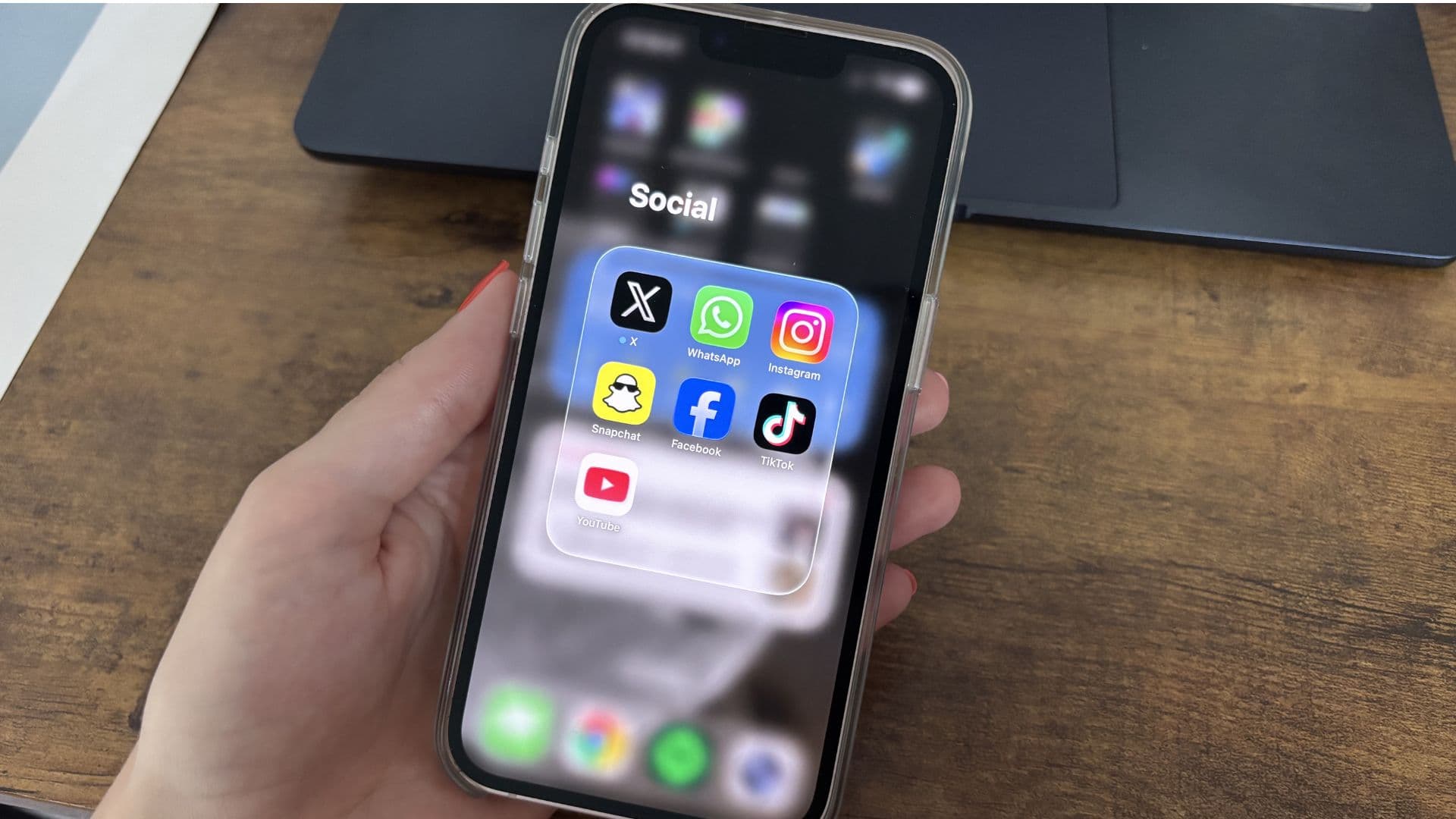
While the full and final list of affected platforms has yet to be officially confirmed, the ban is expected to cover the major social media services that are most widely used by young people in the UK. Based on current reporting and the direction of the legislation, the platforms most likely to fall under the ban include:
- Instagram — Meta's photo and video sharing platform, widely popular among teenagers.
- TikTok — The short-form video app that has become one of the most-used platforms among Gen Z and younger audiences.
- Snapchat — A messaging and stories platform with a large under-18 user base in the UK.
- X (formerly Twitter) — The social networking and microblogging platform owned by Elon Musk.
- Facebook — Meta's flagship social network, which already has a nominal minimum age of 13.
- YouTube — While technically a video platform, its social and community features may bring it within scope.
It is worth noting that the exact scope of the legislation is still being defined. Platforms with primarily educational or communication purposes may be treated differently, and there are ongoing discussions about where the line is drawn between a social media service and other types of online platform.
How Will the Social Media Ban Be Enforced?
Enforcement is arguably the most complex and contested aspect of the ban. The government is expected to place the burden of compliance largely on the social media platforms themselves, requiring them to implement robust age verification systems. This could involve checking users' ages against official identity documents, using third-party age estimation tools, or working with mobile operating systems and app stores to verify ages at the point of download.
Platforms that fail to comply with the age verification requirements could face significant financial penalties under the Online Safety Act framework, which already gives Ofcom — the UK's communications regulator — the power to fine companies a substantial proportion of their global revenue for breaches.
Critics of the enforcement model raise valid concerns. Age verification systems can be bypassed using VPNs, false information, or by accessing platforms via a web browser rather than an app. There is also the question of what happens to existing under-16 accounts and how platforms will identify and remove them retroactively.
What Do Parents Need to Do?
For now, parents and guardians do not need to take any immediate action. The ban is not in effect until Spring 2027, and further guidance is expected to be issued as the legislation develops. However, it is a good time to start conversations with children about their social media use, digital safety, and what changes may be coming.
Parents may also want to familiarise themselves with existing parental controls available on devices and within apps, which can provide a degree of protection in the interim period before the law takes effect.
The Bigger Picture: Why the UK Is Taking This Step
The UK's decision to introduce a social media ban for under-16s reflects a growing global conversation about the responsibilities of tech companies toward younger users. Research linking heavy social media use in adolescents to increased rates of anxiety, depression, poor sleep, and cyberbullying has put pressure on governments worldwide to act. Australia passed similar legislation in late 2024, and other countries are watching closely to see how these policies play out in practice.
Ultimately, the ban represents a significant and deliberately cautious step by the UK government. With Spring 2027 still some way off, there is time for the details to be refined — but the direction of travel is clear. Young people's relationship with social media in the UK is about to change fundamentally, and the conversation about how to protect children online is only going to grow louder in the months ahead.