
The Jeff Bezos AI Quote That Shocked the Internet — And Never Actually Happened
If you've spent any time on social media recently, there's a good chance you came across a deeply unsettling quote attributed to Amazon founder and Blue Origin CEO Jeff Bezos. The statement claimed that water should be prioritized for AI systems over human needs, framing the future of artificial intelligence infrastructure as more important than the wellbeing of ordinary people. The quote spread rapidly, igniting fury among users already deeply concerned about the environmental footprint of AI data centers and the tech industry's growing consumption of natural resources.
It was exactly the kind of dystopian sentiment that critics of Silicon Valley billionaires love to cite as proof that the ultra-wealthy are out of touch with humanity. There was just one problem: Jeff Bezos never said it. The quote was completely fabricated.
How the Fake Quote Spread Across Social Media
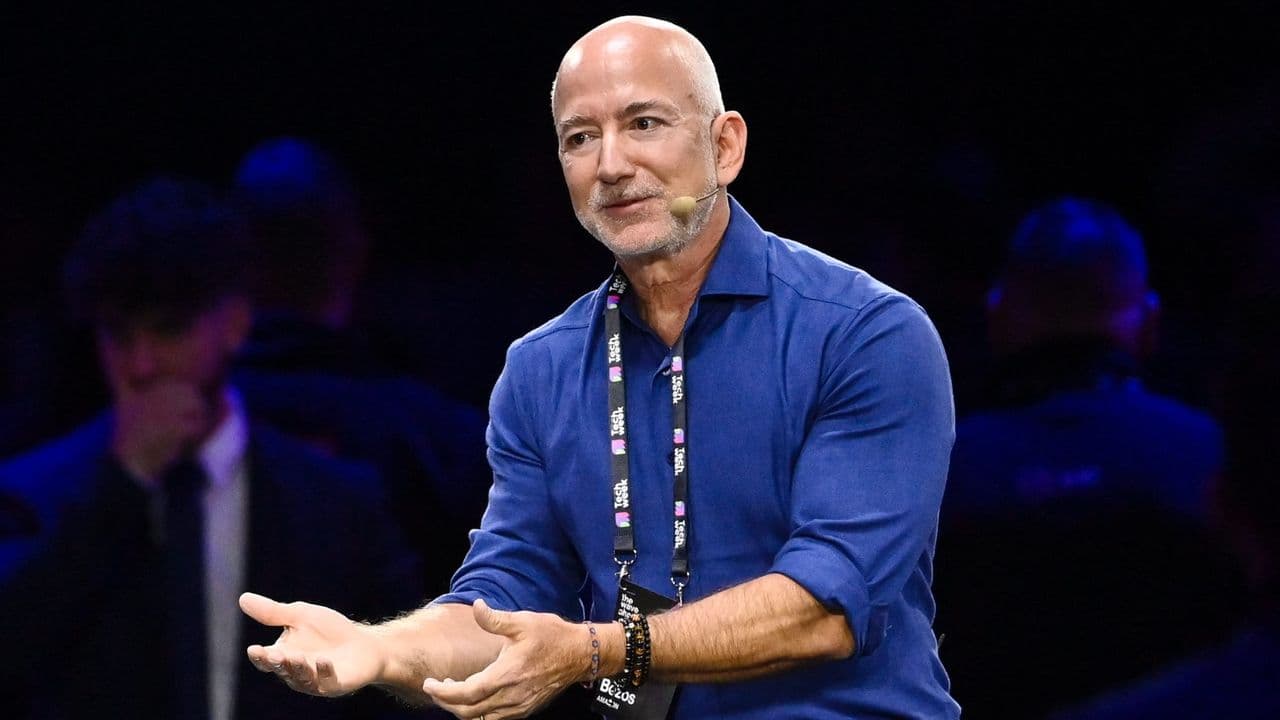
A thorough fact-check conducted by The Quint confirmed that the viral statement does not appear anywhere in footage from Bezos' actual appearance at VivaTech 2026, a major technology conference held in Paris. Despite this, the fabricated claim spread widely across platforms, racking up thousands of shares, comments, and reactions before debunkers could catch up with it.
This is a pattern that has become disturbingly familiar in the age of viral misinformation. A quote, stripped of context or invented wholesale, gets attached to a recognizable name. It confirms what many people already fear or believe about that individual. And because it feels emotionally true, it spreads far faster than any correction ever will. The Jeff Bezos AI water quote is a textbook example of how misinformation exploits existing anxieties — in this case, legitimate concerns about AI's environmental impact — to manufacture outrage around something that simply didn't happen.
What Jeff Bezos Actually Said at VivaTech 2026
So if the viral quote was fabricated, what did Bezos actually discuss during his appearance at VivaTech 2026? The real conversation was wide-ranging and focused primarily on space exploration, the long-term future of human civilization, and the responsible development of emerging technologies. Here is a breakdown of the key topics he genuinely addressed.
Blue Origin and the Future of Space
A significant portion of Bezos' remarks centered on Blue Origin, his private space company. He spoke at length about rockets, lunar missions, and the broader vision of establishing sustained human activity beyond Earth. Far from ignoring earthly concerns, Bezos framed space development as a direct response to them.
A Moon-First Strategy
Bezos outlined what he described as a "Moon-first" approach to space exploration. He argued that the Moon represents the next logical and achievable step before humanity pursues more ambitious goals deeper in the solar system. This phased strategy, he suggested, is both more practical and more sustainable than aiming immediately for Mars or beyond.
Moving Heavy Industry Off Earth
One of the more striking elements of Bezos' actual remarks was his argument that heavy industry and polluting manufacturing should eventually be relocated off Earth and into space. Rather than continuing to burden the planet's ecosystems with industrial activity, he envisions a future where Earth is protected while resource-intensive work happens elsewhere in the solar system.
Earth as a "Garden Planet"
Connected to this vision, Bezos described Earth in terms that were surprisingly environmentally conscious. He referred to the planet as a unique "garden planet" worth preserving, and suggested that using materials from asteroids and other space-based resources could dramatically reduce the environmental pressure placed on Earth's finite ecosystems. This is, notably, the opposite of the callous disregard for human and environmental welfare that the fake quote implied.
Advanced Computing and Space Development
Bezos also touched on the role of breakthroughs in computing, manufacturing, and automation in enabling future space development. He presented these technologies not as ends in themselves but as tools for unlocking humanity's ability to expand and thrive beyond the home planet.
Artificial General Intelligence
On the topic of AI specifically, Bezos referenced ongoing efforts to develop Artificial General Intelligence, or AGI. He discussed how more capable AI systems could accelerate scientific discovery, drive innovation, and improve manufacturing — framing advanced AI as a powerful tool for human progress rather than a replacement for human welfare.
AI, Jobs, and Economic Disruption
Bezos also acknowledged the genuine public anxiety around AI and employment. He did not dismiss concerns about job displacement, but he argued that historical technological revolutions have consistently created new categories of work and opportunity rather than simply eliminating jobs in net terms. Whether one agrees with that assessment or not, it is a far cry from claiming water should be diverted from humans to serve AI systems.
Responsible AI Development
Perhaps most relevant to the fake quote controversy, Bezos specifically addressed the importance of responsible AI development. Though the source material was partially cut off, his framing made clear that he views ethical considerations as central to how AI should be built and deployed — again, a position directly contradicted by the fabricated viral statement.
Why This Matters Beyond One Fake Quote
It would be easy to dismiss this episode as just another minor misinformation incident in an endless stream of them. But the speed with which the fake Bezos quote spread — and the intensity of the reaction it provoked — reveals something important about the current media environment.
Public anxiety about AI's resource consumption is entirely legitimate. Data centers do consume enormous amounts of water and energy. The environmental cost of training large AI models is a real and growing concern that deserves serious scrutiny. But when fabricated quotes are used to channel that anxiety, the result is not accountability — it is noise. It makes it harder to have productive conversations about genuine issues, and it damages trust in the information ecosystem that makes those conversations possible.
Misattributing statements to public figures — even figures who are already controversial or polarizing — is not a shortcut to truth. It is a distortion of it. And in a moment when the public desperately needs accurate information to make sense of fast-moving technological change, that distortion carries a real cost.
How to Spot AI-Related Misinformation
Given how rapidly fake quotes and fabricated claims can spread, it is worth keeping a few practical habits in mind when you encounter a shocking statement attributed to a tech executive or public figure online. Always look for a primary source — a video clip, a transcript, or a report from a credible outlet that directly quotes the individual. If a quote is only appearing in social media posts and not in any news coverage, that is a significant red flag. Cross-reference with trusted fact-checking organizations before sharing or reacting. And remember that outrage, however justified it might feel in the moment, is one of the most powerful drivers of misinformation spread.
The Jeff Bezos AI water quote was fabricated. What he actually said at VivaTech 2026 was substantively different — and understanding the difference matters if we want to hold powerful figures to account for what they actually believe and say.