
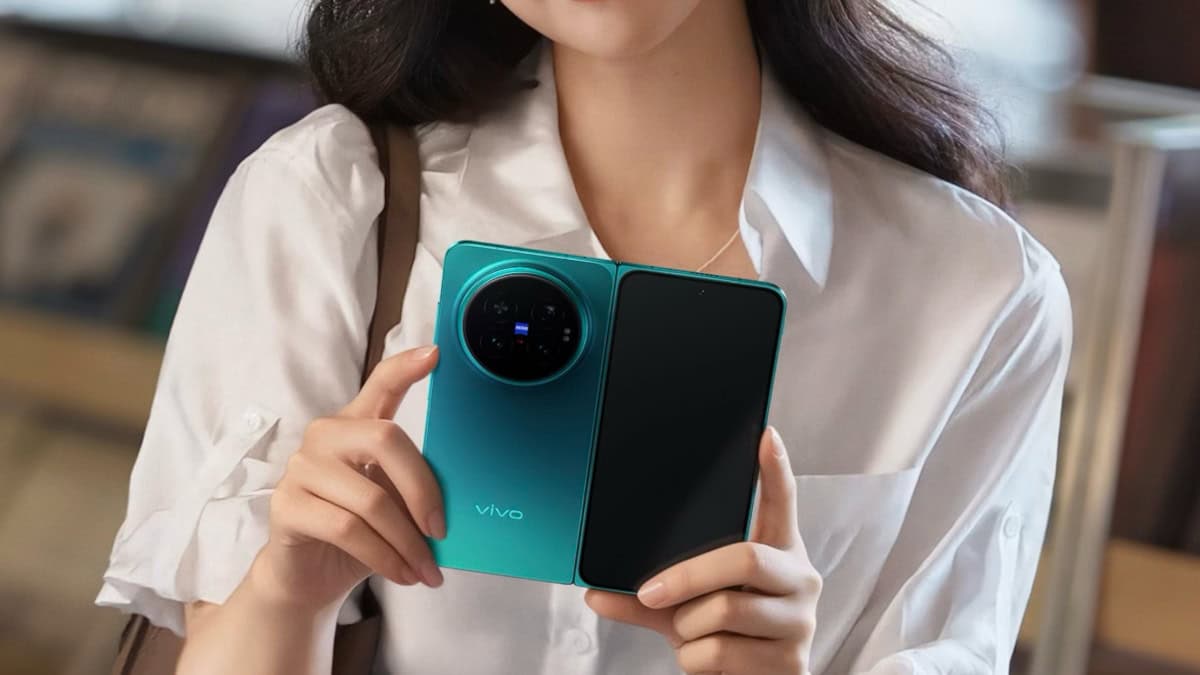
Vivo X Fold 6 Could Put Samsung's Galaxy Z Fold 8 Ultra to Shame With Its Massive Battery
The foldable smartphone market is heating up, and the competition has never been fiercer. Samsung has long held a commanding position in the premium foldable segment, with the Galaxy Z Fold series setting the benchmark for performance, design, and versatility. But a new challenger is stepping into the ring with a feature so impressive it could force even the most loyal Samsung fans to take a second look. Vivo has officially confirmed that the upcoming vivo X Fold 6 will ship with a colossal 7,000mAh battery — a capacity that would make it one of the most powerful foldable phones ever built.
Why Battery Capacity Matters More Than Ever in Foldable Phones
Foldable smartphones have always faced a unique engineering challenge. The large, flexible displays that make these devices so compelling are also power-hungry components that drain batteries significantly faster than traditional flat screens. Running two displays — an outer cover screen and a large inner panel — simultaneously puts enormous strain on battery reserves. This is precisely why battery capacity has become one of the most scrutinized specifications in the foldable segment.
Most flagship foldables on the market today sit somewhere in the 4,400mAh to 5,000mAh range, which many users find barely adequate for a full day of heavy use. The expectation is that as foldable technology matures, battery sizes will grow to compensate for the increased power demands. Vivo appears to have taken this expectation seriously — and then some.
The Vivo X Fold 6: Breaking Records With a 7,000mAh Battery
Vivo has officially confirmed via Weibo that the vivo X Fold 6 will pack a 7,000mAh battery. To put that figure into perspective, this capacity is not just unprecedented for a foldable phone — it rivals and even surpasses the battery sizes found in many dedicated battery-life champion smartphones designed specifically for endurance. In the world of foldables, where engineering constraints make large batteries exceptionally difficult to accommodate, this is a remarkable engineering achievement.
The sheer scale of this battery suggests that vivo has found a way to redesign the internal architecture of the X Fold 6 to free up significantly more space for power storage, or has adopted newer, denser battery cell technology that allows for higher capacity within the same physical footprint. Either way, the result is a foldable phone that could theoretically last multiple days on a single charge under moderate usage conditions — something no foldable device has managed to offer convincingly until now.
IPX8 and IPX9 Water Resistance: Durability Gets a Serious Upgrade
The impressive battery is not the only headline feature that Vivo has confirmed for the X Fold 6. The device will also carry both IPX8 and IPX9 water resistance ratings, which represent a significant durability milestone for a foldable phone. IPX8 certification means the device can withstand submersion in water beyond one meter for an extended period, while IPX9 adds protection against high-pressure and high-temperature water jets — a standard more commonly associated with industrial equipment and rugged devices.
Achieving dual IPX ratings on a device with a folding hinge mechanism is no small feat. The mechanical complexity of a foldable design introduces multiple points of potential water ingress that are simply not present on a traditional candy-bar smartphone. Vivo's success in achieving both ratings points to a meaningful investment in sealing technology and build quality.
It is worth noting, however, that as of the confirmed specifications, there has been no mention of dust resistance for the X Fold 6. The device does not appear to carry an IP6X or equivalent dust protection rating, which means it may not offer the same level of all-around environmental protection as some competing flagships that carry full IP68 ratings covering both dust and water.
How Does the Vivo X Fold 6 Compare to the Samsung Galaxy Z Fold 8?
Samsung is widely expected to unveil the Galaxy Z Fold 8 in the near future, and credible leaks suggest the device will receive a notable battery capacity increase compared to its predecessor, the Galaxy Z Fold 7. However, even with an upgrade, Samsung's offering is expected to fall well short of the 7,000mAh figure that Vivo has confirmed for the X Fold 6. This gap, if it materializes as anticipated, could become one of the defining talking points in comparisons between the two devices.
Beyond battery life, the two phones are expected to compete across several key dimensions:
- Display quality: Samsung's AMOLED technology is among the best in the industry, and the Galaxy Z Fold 8 Ultra is expected to push brightness and color accuracy to new heights. Vivo's LTPO AMOLED panels have also impressed in previous generations, though Samsung historically holds a slight edge in display refinement.
- Performance: Both devices are expected to be powered by the latest Snapdragon chipset, meaning raw processing performance is unlikely to be a significant differentiator between the two.
- Software experience: Samsung's One UI remains one of the most polished and foldable-optimized Android skins available globally, with years of refinement specifically for large-screen multitasking. Vivo's OriginOS offers a capable experience but may lack the breadth of foldable-specific features that Samsung has built over multiple generations.
- Global availability: This is arguably where Samsung retains its most significant advantage. The Galaxy Z Fold 8 will be available worldwide through major carriers and retail channels, while Vivo's X Fold lineup has historically remained limited primarily to China and select Asian markets.
What This Means for the Future of Foldable Phone Competition
The confirmation of the vivo X Fold 6's 7,000mAh battery is more than just a product specification — it is a statement of intent. Chinese manufacturers have consistently pushed hardware boundaries in ways that have forced global players to accelerate their own development timelines. Vivo's move signals that the era of foldable phones making concessions on battery life may be coming to an end.
For consumers, this is excellent news. The intensifying competition between vivo, Samsung, Huawei, Honor, and other foldable manufacturers means that buyers can expect faster improvements across all key metrics — not just battery life, but display durability, hinge longevity, camera performance, and overall software polish.
Whether the vivo X Fold 6 becomes available outside of China remains to be seen, but its specifications alone are already influencing the conversation around what a premium foldable phone should offer in 2025 and beyond. If Vivo can deliver on the promise of its confirmed specs, it will have raised the bar for the entire category — and put Samsung on notice that the Galaxy Z Fold's position at the top of the foldable throne is no longer uncontested.
Final Verdict: Should You Wait for the Vivo X Fold 6?
If you are in the market for a premium foldable smartphone and battery life is a top priority, the vivo X Fold 6 deserves serious attention. A 7,000mAh battery in a foldable form factor is genuinely groundbreaking, and the addition of IPX8 and IPX9 water resistance shows that Vivo is not cutting corners on durability either. Keep an eye on official announcements for full specifications, pricing, and — crucially — availability in your region, as that last factor may ultimately determine whether this impressive device can truly rival the Galaxy Z Fold 8 for the majority of global consumers.