
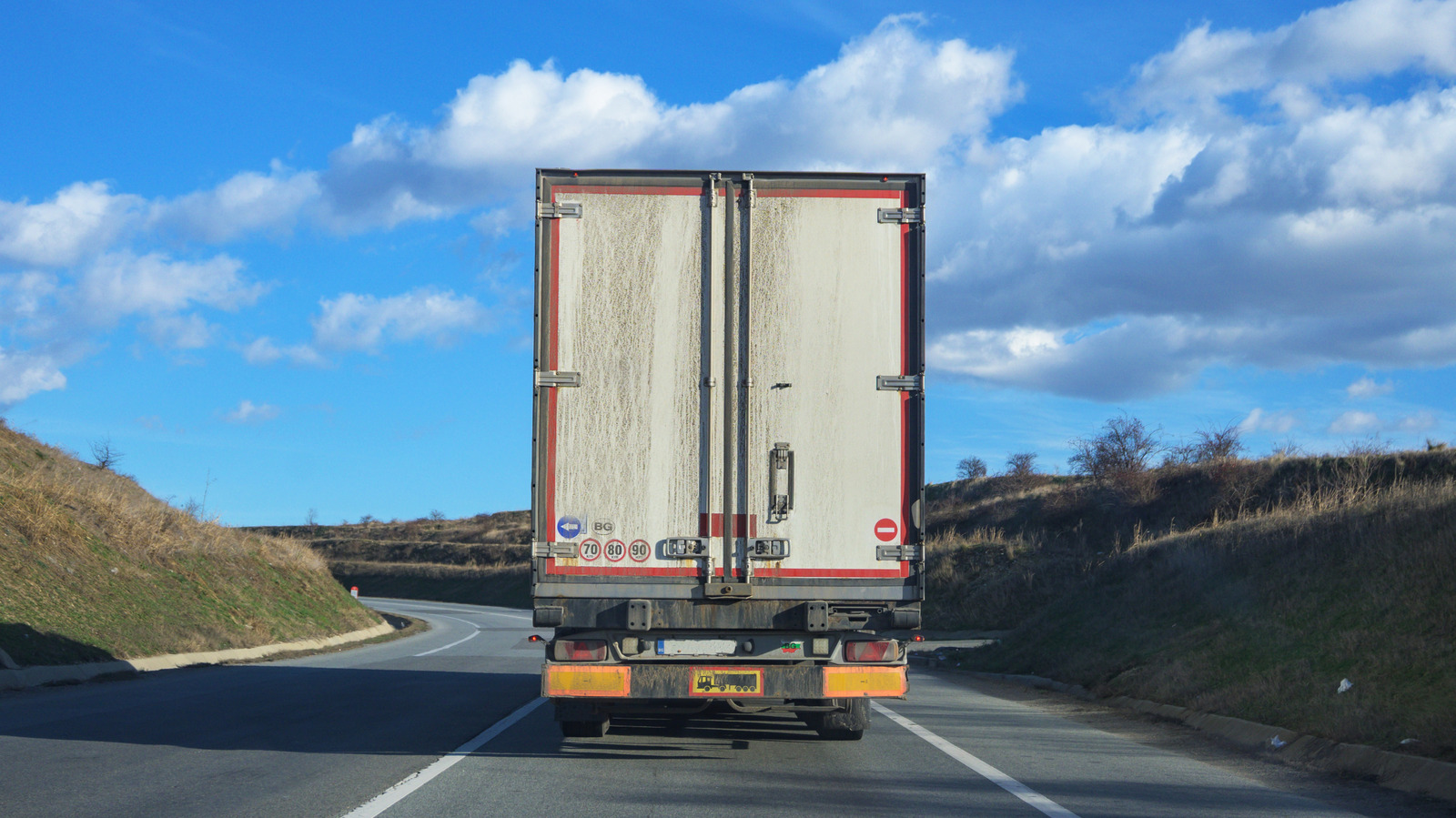
The Mystery of Multiple Speed Limit Stickers on European Trucks
If you have ever driven on a motorway in France, Germany, Spain, or anywhere else across Europe, you have almost certainly spotted large trucks with a cluster of circular speed limit stickers plastered across the back of their trailers. At first glance, it can seem confusing — even redundant. Why would a single vehicle need to display three, four, or sometimes even five different speed limit signs at the same time? The answer lies in a fascinating combination of European Union regulations, individual country laws, vehicle classifications, and road safety requirements that together create one of the more visually distinctive quirks of European road transport.
Understanding How Speed Limits Work for Heavy Goods Vehicles in Europe
Unlike passenger cars, which generally follow a country's standard national speed limits, heavy goods vehicles (HGVs) and trucks are subject to a far more layered set of rules. Speed limits for trucks vary not only from country to country but also depending on the type of road being traveled — whether it is a motorway, a dual carriageway, a single carriageway, or an urban road. On top of that, limits can change depending on the weight of the vehicle, whether it is towing a trailer, and even what type of cargo it is carrying.
This means that a single truck traveling from the United Kingdom through France and into Germany might be legally required to observe a different maximum speed on each leg of its journey, and potentially a different limit again once it exits the motorway and enters a town. To communicate all of this information clearly and at a glance — both to the driver and to law enforcement — multiple stickers are used.
What Each Sticker Actually Represents
Each circular speed limit sticker on the back of a truck corresponds to a specific road type or jurisdiction. A typical set of stickers might include the following categories:
- Motorway speed limit: The maximum speed the vehicle is permitted to travel on a high-speed divided highway, which varies considerably across European nations.
- Dual carriageway or expressway limit: A slightly lower figure that applies on roads with a central reservation but not classified as full motorways.
- Single carriageway limit: A further reduced speed for standard two-way roads where opposing traffic shares the same surface.
- Urban or built-up area limit: The lowest figure, applying within towns and cities where pedestrian and cyclist safety is a primary concern.
Some trucks carry additional stickers if they operate across borders with particularly strict national regulations, or if they are carrying hazardous materials, oversized loads, or refrigerated goods that come with their own legal speed requirements.
How European Union Regulations Shape the System
The European Union has made considerable efforts to harmonize road transport rules across its member states, but speed limits for trucks remain an area where national governments retain significant authority. The EU sets broad frameworks — for example, establishing that trucks above 3.5 tonnes must not exceed 90 km/h on motorways in most member states — but individual countries are free to set lower limits and apply additional restrictions.
Germany, for instance, allows trucks on motorways up to 80 km/h, while France permits 90 km/h under certain conditions. Spain similarly sits at 90 km/h on motorways for vehicles under specific weight thresholds, dropping lower for heavier combinations. When a haulage company operates internationally, its drivers need an at-a-glance reference for every relevant limit, which is precisely what the sticker system provides.
The Role of Tachographs and Enforcement
European trucks are required by law to be fitted with digital tachographs — devices that record speed, distance, and driving time with great precision. Speed limit compliance is therefore not simply a matter of a driver's good intentions; it is electronically logged and can be inspected by roadside authorities at any time. The speed limit stickers work in tandem with this system, ensuring that drivers always have a visible reminder of the legal maximum for their vehicle type on the road they are currently traveling.
Enforcement agencies across Europe take HGV speed violations seriously, as the stopping distances and accident consequences associated with a loaded truck traveling too fast are significantly greater than those of a passenger car. Fines can be substantial, and in some countries, vehicles can be immobilized on the spot if a serious violation is recorded.
Are the Stickers Mandatory?
In many European countries, displaying speed limit stickers on the rear of trucks is not merely a helpful guideline — it is a legal requirement. Countries including France, Spain, Portugal, and Belgium mandate that trucks display the applicable speed limits clearly on the vehicle's rear. The exact specifications, including the size and color of the stickers, are often regulated to ensure uniformity and visibility.
Haulage operators who fail to display the correct stickers can face fines, and their vehicles may be flagged during roadside inspections. As a result, reputable trucking companies take the correct application of speed limit stickers very seriously as part of their broader compliance obligations.
A Simple Solution to a Complex Problem
What looks like a confusing cluster of signs to the casual observer is actually a remarkably practical solution to the genuine complexity of cross-border road transport regulation. Multiple speed limit stickers on European trucks serve as a portable, always-visible legal reference guide — one that keeps drivers informed, satisfies regulatory requirements in multiple jurisdictions simultaneously, and helps roadside authorities quickly verify compliance without needing to consult lengthy documentation.
Next time you find yourself sitting behind a truck on a European motorway, those stickers are doing far more work than they might appear to be. They are the visible face of an intricate regulatory ecosystem designed to keep some of the heaviest vehicles on the road traveling safely and within the law — no matter which country they happen to be passing through.