
Chinese Investors Secretly Acquired SpaceX Stakes Before the IPO
Long before SpaceX made headlines with its initial public offering, a quiet and carefully concealed story was unfolding behind closed doors. A private investor list obtained by ProPublica has revealed that a businessman with documented ties to Chinese military contractors was among the overseas investors who managed to acquire stakes in Elon Musk's rocket company while it remained privately held. The disclosure has sent shockwaves through the national security community and raised urgent questions about how foreign capital — particularly from China — found its way into one of America's most sensitive defense-related enterprises.
What the ProPublica Report Reveals
The ProPublica report sheds light on a particularly delicate chapter in SpaceX's corporate history. According to the private investor list obtained by the outlet, at least one businessperson with known connections to Chinese military contractors successfully acquired a stake in SpaceX during its years as a private company. The details were not disclosed through official channels, which is precisely what makes the revelation so alarming to regulators and national security officials.
The same investor list also indicates that an entity linked to the Qatari royal family took a position in SpaceX. While Qatari investment in American companies is generally viewed with less suspicion than Chinese investment, the breadth of foreign capital that quietly entered SpaceX underscores a systemic gap in oversight of private company fundraising rounds. Because private companies are not subject to the same public disclosure rules as their publicly traded counterparts, such investments can remain hidden from public scrutiny for years.
Why SpaceX Is a Particularly Sensitive Target
SpaceX is not a typical technology startup. The company has built a significant portion of its business around sensitive contracts with the United States federal government. Among its most high-profile work is the manufacturing and deployment of spy satellites for the Pentagon, a program that places SpaceX at the center of America's national defense infrastructure. The company also carries out crewed and uncrewed missions for NASA and operates the Starlink satellite internet constellation, which has played a documented role in active military conflicts.
Given the nature of this work, the question of who owns equity in SpaceX — even as a minority investor — carries enormous implications. Foreign stakeholders, even those without any operational role in the company, may in theory gain access to financial disclosures, internal projections, or strategic planning documents that would otherwise be protected. For a company handling classified government payloads, even indirect exposure to a foreign adversary represents a meaningful vulnerability.
Chinese Investment in US Defense: A Legal Gray Zone
One of the more surprising aspects of this story is that, under current American law, there is no outright ban on Chinese investment in US military contractors. While such investment is subject to heavy regulation and review — primarily through the Committee on Foreign Investment in the United States, known as CFIUS — it is not categorically prohibited. This legal gray zone has allowed foreign capital to enter sensitive industries through mechanisms that do not always trigger mandatory review.
The US government has long alleged that China maintains a deliberate strategy of using investments in sensitive American industries not purely for financial return, but for espionage purposes and to gain access to cutting-edge technology. Intelligence officials have repeatedly warned that even passive minority stakes can serve as entry points for intelligence gathering. The SpaceX case, if the ProPublica reporting is accurate, would represent a textbook example of that strategy playing out in one of the most sensitive corners of the American defense sector.
SpaceX Responds: Barring Chinese Investors From Its IPO
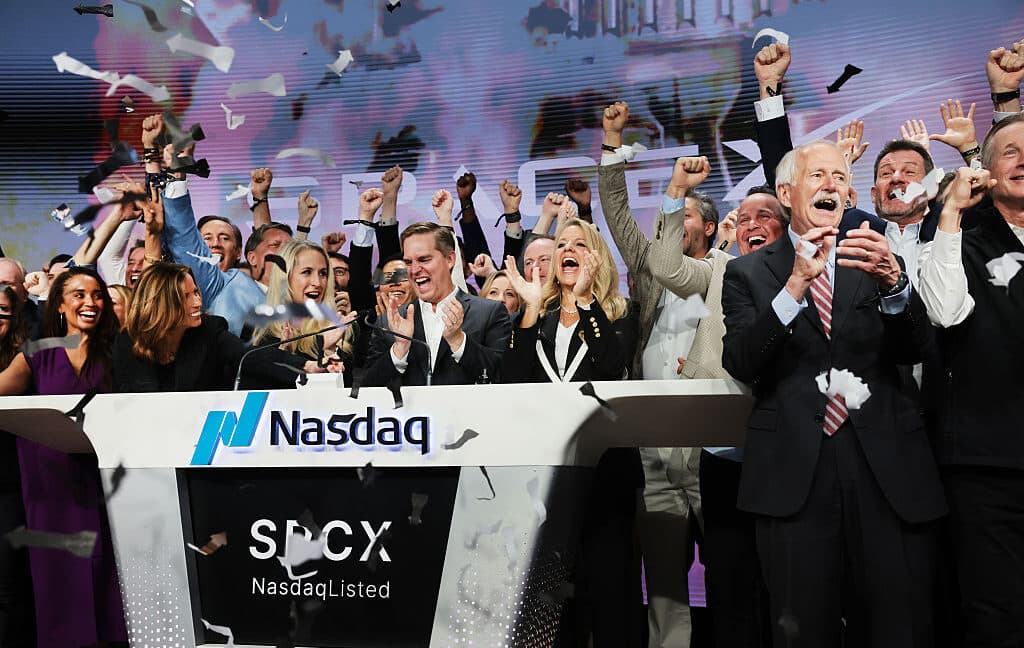
In what appears to be a direct response to the regulatory and reputational risks now surrounding its investor base, SpaceX took a notable step during its initial public offering last week. According to a report from Bloomberg, the company explicitly barred investors from China and Hong Kong from participating in the IPO, citing what it described as "regulatory and compliance risks." The move signals that SpaceX is well aware of the sensitivity of its investor composition and is now taking active steps to address it in the public markets.
The decision to exclude Chinese and Hong Kong investors from the IPO is significant not just as a compliance measure, but as a public signal about the direction of SpaceX's regulatory posture. It suggests that the company, and likely its advisors and government partners, are drawing a clearer line between acceptable and unacceptable foreign participation going forward.
Broader Implications for US National Security Policy
The SpaceX case is likely to accelerate ongoing debates in Washington about how to close the regulatory loopholes that allow foreign investment in sensitive private companies to go undetected or unreviewed. Several key issues have emerged from this story:
- Private companies working on government contracts may need to be subject to enhanced foreign ownership disclosure requirements, similar to those already applied to publicly traded defense contractors.
- CFIUS review triggers may need to be expanded to capture smaller minority stakes in companies with classified government work, not just controlling or significant ownership positions.
- Intelligence agencies and defense procurement offices may need to conduct more rigorous vetting of the investor bases of private companies before awarding sensitive contracts.
Without legislative or regulatory reform, the SpaceX situation is unlikely to be an isolated case. Hundreds of private American companies work on sensitive government projects, and many have raised capital from international investors without triggering meaningful government scrutiny.
What Happens Next
As SpaceX transitions into a publicly traded company, its investor composition will come under far greater scrutiny than was ever required during its private years. The revelations from ProPublica's reporting arrive at a moment when US-China tensions over technology, defense, and trade are already at a historic high. Lawmakers on both sides of the aisle have shown growing appetite for tightening restrictions on Chinese investment in sensitive industries, and the SpaceX story is expected to add fresh momentum to that effort.
For Elon Musk, who has cultivated a complex and sometimes contradictory relationship with China — operating Tesla factories there while also managing America's most strategically important rocket company — the scrutiny is set to intensify. The question of who owns SpaceX, and how those ownership positions were acquired, is no longer a matter that can remain quietly off the record.