
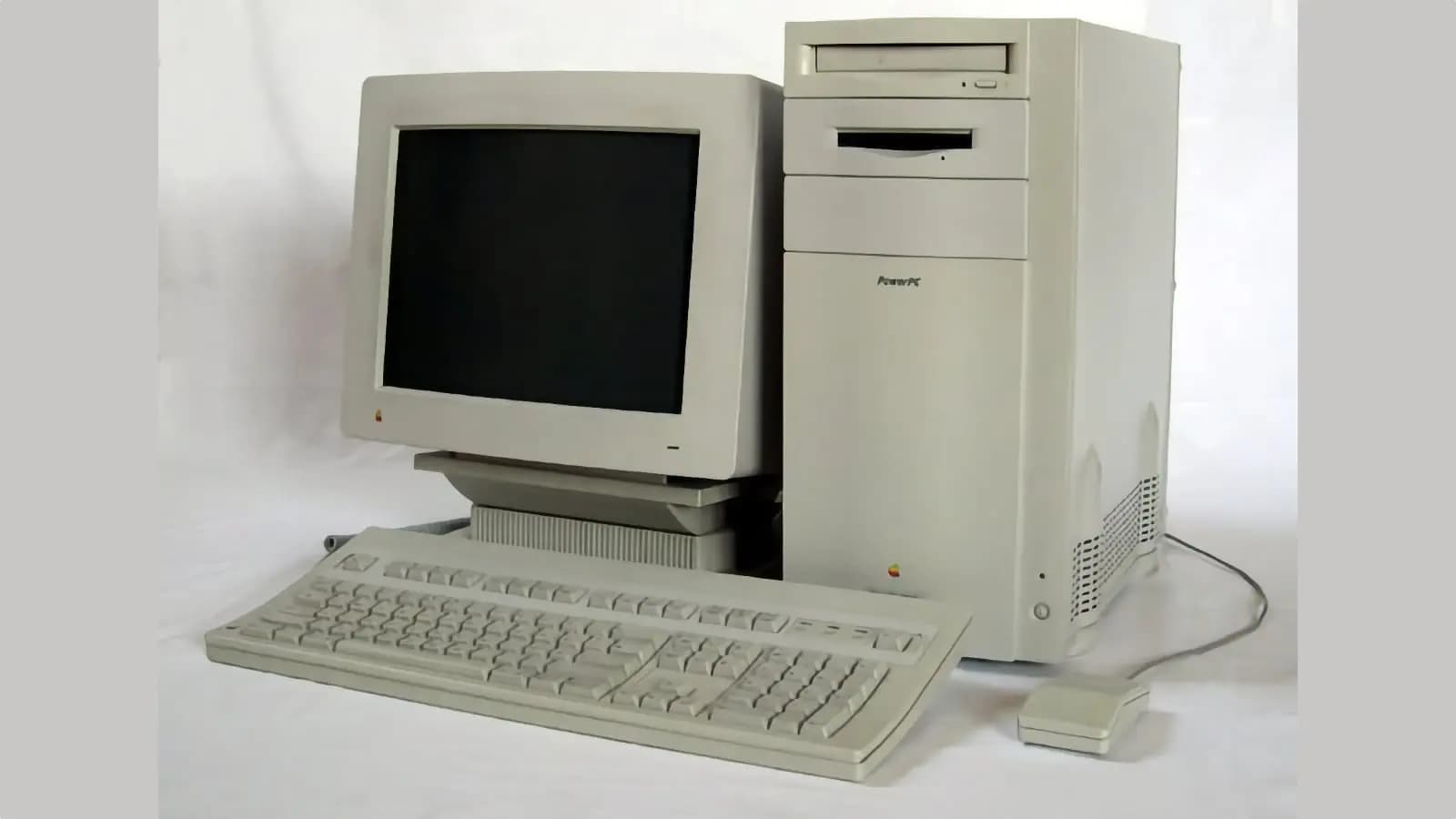
Today in Apple History: The Power Macintosh 9500 Redefined High-End Computing
On June 19, 1995, Apple unveiled a machine that would stand as one of the most significant professional desktop computers of its era: the Power Macintosh 9500. Sitting at the very top of Apple's product line, this tower was designed for power users, creative professionals, and anyone who demanded the absolute best from their desktop computer. Decades later, it remains a beloved milestone in Apple's storied history — a symbol of what the company could achieve when it committed fully to raw performance and expandability.
What Was the Power Macintosh 9500?
The Power Macintosh 9500 was a high-end desktop computer released by Apple as part of its Power Macintosh line, which had launched just a year earlier in 1994. The entire Power Mac lineup was built around Apple's bold transition from the aging Motorola 68000 series processors to the new PowerPC architecture, a joint venture between Apple, IBM, and Motorola — an alliance often referred to as the AIM alliance.
What set the 9500 apart from its predecessors was its use of a second-generation PowerPC processor, specifically the PowerPC 604. This chip delivered a dramatic leap in processing power compared to the first-generation PowerPC 601 chips found in earlier Power Macs. The 604 was faster, more efficient at handling multiple tasks, and far more capable of tackling the kinds of demanding workloads that professional users of the mid-1990s required, from desktop publishing and video editing to scientific computing and 3D rendering.
Performance That Turned Heads in 1995
In 1995, raw computational speed was a fiercely contested battleground. Intel's Pentium processors were racing ahead on the PC side, and Apple needed to show the world that the Mac platform could keep pace — or surpass the competition. The Power Macintosh 9500 made a compelling argument.
At launch, the 9500 was available with either a 120 MHz or 132 MHz PowerPC 604 processor. These clock speeds might seem quaint today, but in context, they were blistering. Benchmark tests of the era consistently placed the 9500 among the fastest personal computers money could buy, and Apple was not shy about marketing it as such. The machine was genuinely competitive with high-end PC workstations, which was a significant achievement given how much doubt had surrounded the PowerPC transition just a year earlier.
Apple later expanded the 9500 lineup with even faster configurations, including a 150 MHz and a 180 MHz version, keeping the machine competitive as the year progressed and rival chips improved.
Expandability: Built for Professionals Who Needed More
Speed alone was not what made the Power Macintosh 9500 exceptional. Its extraordinary expandability was equally impressive and, for many professionals, even more important. Apple engineered the 9500 to be one of the most configurable personal computers it had ever built.
The machine featured a total of twelve expansion slots, a number that was virtually unheard of in the Mac world at the time. These included:
- Six PCI slots, embracing the industry-standard Peripheral Component Interconnect bus that was rapidly becoming the professional standard for add-in cards.
- Three dedicated video slots for connecting multiple monitors, a feature that creative professionals, particularly graphic designers and video editors, found invaluable.
- Additional slots for NuBus cards, ensuring compatibility with the large installed base of existing Mac expansion cards that professionals had already invested in.
This level of expandability meant the 9500 could be configured in countless ways to suit specific workflows. A video editor could load the machine with capture cards and accelerators. A scientist could add specialized data acquisition hardware. A graphic designer could connect two or even three monitors simultaneously. The 9500 was, in essence, a professional workstation that happened to run the Mac OS.
Design and Construction: The Tower That Meant Business
The Power Macintosh 9500 arrived in a large, utilitarian tower chassis that prioritized function over form. This was not the era of Apple's translucent, colorful designs — that revolution was still a few years away, waiting for Steve Jobs to return to the company. The 9500's case was a straightforward, industrial-looking enclosure designed to accommodate all those expansion slots and to provide adequate cooling for its powerful internals.
Despite its no-nonsense appearance, the interior was thoughtfully organized. Apple designed the case to open easily, making it relatively straightforward for technicians and experienced users to install expansion cards, add RAM, or swap storage drives. For a professional machine intended to evolve over time, this accessibility was an important practical consideration.
The Power Mac 9500's Place in Apple's Broader Story
Looking back, the Power Macintosh 9500 represents a fascinating moment in Apple's history. The company was in the middle of one of its most turbulent periods, struggling with internal management conflicts and increasing pressure from the Windows PC market. Yet despite these challenges, Apple was still capable of engineering genuinely world-class hardware.
The 9500 also arrived just months before Windows 95 launched in August of that year — an event that would dramatically reshape the personal computing landscape and intensify competition. The fact that Apple had a machine this capable on the market heading into that watershed moment speaks to the strength of its engineering teams during the mid-1990s.
The PowerPC platform that powered the 9500 would continue to serve Apple for over a decade, until the company made its second major processor transition in 2006, moving to Intel chips. That transition, managed under Steve Jobs, went far more smoothly than many observers expected — in part because Apple had spent years building expertise in major architectural shifts, experience that began with the very PowerPC transition that made the 9500 possible.
Why the Power Macintosh 9500 Still Matters Today
For Apple historians, vintage computing enthusiasts, and longtime Mac users, the Power Macintosh 9500 holds a special place. It represents the pinnacle of a particular era in Apple's history, combining serious professional-grade performance with a level of hardware expandability that Apple has rarely matched since. As Apple has moved increasingly toward sealed, non-upgradeable designs in recent decades, machines like the 9500 serve as a reminder that the company once built computers intended to grow alongside their owners' needs.
The 9500's legacy also endures in the PowerPC architecture itself, which influenced processor design for years and formed the foundation of some of Apple's most celebrated products of the late 1990s and early 2000s. Every time a vintage computing enthusiast powers up a Power Mac 9500 today, they are connecting with a genuine piece of computing history — one that helped shape the Apple we know in the modern era.