
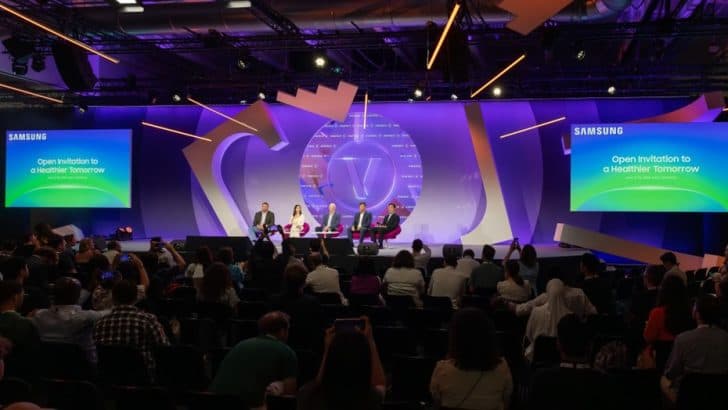
Samsung Takes Center Stage at VivaTech 2026 With a Bold Health Vision
At VivaTech 2026, Europe's largest startup and technology exhibition currently underway in Paris, Samsung Electronics stepped into the spotlight to share a forward-looking vision that could redefine how people manage their health every single day. During a high-profile panel discussion attended by approximately 1,000 global guests, Samsung laid out its concept of connected care — a holistic approach to daily wellness powered by an open, collaborative technology ecosystem. The session made one thing abundantly clear: the future of healthcare will not be built in silos, and Samsung is positioning itself as the connective tissue that ties together a new generation of health innovation.
What Is Connected Care and Why Does It Matter?
Connected care is more than a buzzword. At its core, it represents the seamless integration of devices, data, and services to support a person's health across every dimension of daily life — from sleep and fitness tracking to chronic disease management and preventive care. Rather than relying on isolated check-ups or reactive treatments, connected care envisions a world where technology continuously monitors, interprets, and responds to a user's health signals in real time.
For Samsung, this vision is not theoretical. The company has spent years building the infrastructure — hardware, software, and partnerships — needed to make connected care a lived reality for millions of users around the world. VivaTech 2026 gave Samsung the platform to articulate that vision on a global stage and demonstrate how far it has already come.
A Power-Packed Panel Discussion
The panel discussion at VivaTech 2026 brought together some of the most influential voices in digital health and technology investment. Hon Pak, Head of the Digital Health Team for the Mobile eXperience (MX) Business at Samsung Electronics, represented the company's perspective on building health-oriented consumer technology. He was joined by David Lee, Head of Samsung Next, who served as the panel's moderator and set the philosophical tone for the conversation from the outset.
Rounding out the group were three prominent CEOs from the health tech space: Mike McSherry of Xealth, a platform focused on digital health program delivery; Alina Su of Generation Lab, a company working at the intersection of longevity science and consumer wellness; and Michael Dubrovsky of SiPhox Health, a firm pioneering at-home blood testing through photonics technology. Together, these five speakers painted a comprehensive picture of where healthcare technology is headed and what it will take to get there.
David Lee opened the discussion with a statement that captured the spirit of the entire conversation: "The future of health cannot be built by one company alone. It must be forged through an open ecosystem of collaboration among diverse innovators." This framing — collaboration over competition — became the throughline for everything that followed.
Samsung's Open Ecosystem: The Foundation of Connected Care
One of the most compelling elements of Samsung's presentation was the breadth and depth of its existing technology portfolio. Samsung is not merely a smartphone company; it operates across an extraordinarily wide range of product categories and industries. From semiconductors and displays to mobile devices, wearables, home appliances, and smart TVs, Samsung's hardware footprint gives it a unique ability to embed health awareness into virtually every corner of a person's daily life.
This diversity is not just impressive on paper — it is strategically significant. By leveraging economies of scale across its business sectors, Samsung is able to cultivate deep, meaningful partnerships with developers, health platforms, medical organizations, and innovative startups. The goal is to integrate Samsung devices and platforms into a unified health experience that feels natural and frictionless to the end user.
- Wearables: Samsung's Galaxy Watch lineup already provides continuous heart rate monitoring, sleep tracking, blood oxygen measurement, and irregular rhythm notifications, feeding health data directly to users and their care teams.
- Mobile devices: Samsung smartphones serve as command centers for health data, aggregating information from multiple devices and apps into a coherent picture of overall wellness.
- Home appliances and TVs: As the smart home becomes more sophisticated, even refrigerators and televisions can play a role in nudging healthier behaviors and monitoring wellness indicators.
- Semiconductors: At the infrastructure level, Samsung's chip technology powers the low-latency, high-accuracy processing that makes real-time health monitoring both reliable and energy-efficient.
Why an Open Ecosystem Beats a Closed One
Samsung's emphasis on openness is not accidental. In a landscape where tech giants have historically competed to keep users locked within proprietary ecosystems, Samsung is making a deliberate strategic bet that collaboration will produce better health outcomes — and, ultimately, greater trust from consumers and healthcare providers alike.
An open ecosystem means that third-party developers can build applications and services that integrate with Samsung's hardware and health data platforms. It means that a startup like SiPhox Health can connect its at-home blood testing technology to a Galaxy Watch, creating a richer, more complete picture of a user's metabolic health. It means that a digital health delivery platform like Xealth can work seamlessly alongside Samsung devices to ensure that patients receive the right health content and interventions at the right time.
This model accelerates innovation by allowing specialized companies to contribute their expertise without needing to build everything from scratch. It also reduces barriers to adoption, since users can access a wider range of services through devices they already own and trust.
The Road Ahead for Digital Health and Daily Wellness
VivaTech 2026 served as a powerful reminder that the digital health revolution is no longer a future promise — it is an unfolding reality. Samsung's participation in the event, and the quality of the conversations it sparked, reflects just how seriously the company takes its role as a health technology enabler.
As connected care continues to mature, the combination of Samsung's scale, its open ecosystem philosophy, and its growing network of health-focused partners positions it to be a defining force in how people experience wellness in the years ahead. Whether through a smartwatch that detects early signs of atrial fibrillation, a home appliance that supports healthier routines, or a smartphone app that synthesizes data from dozens of health sources, Samsung's ambition is nothing less than making meaningful, proactive health support available to everyone, every day.
For the global attendees gathered in Paris, Samsung's message at VivaTech 2026 was both timely and energizing: the technology to transform personal health already exists. Now it is a matter of building the right partnerships, maintaining an open spirit of collaboration, and ensuring that the benefits reach people wherever they are in their health journey.