
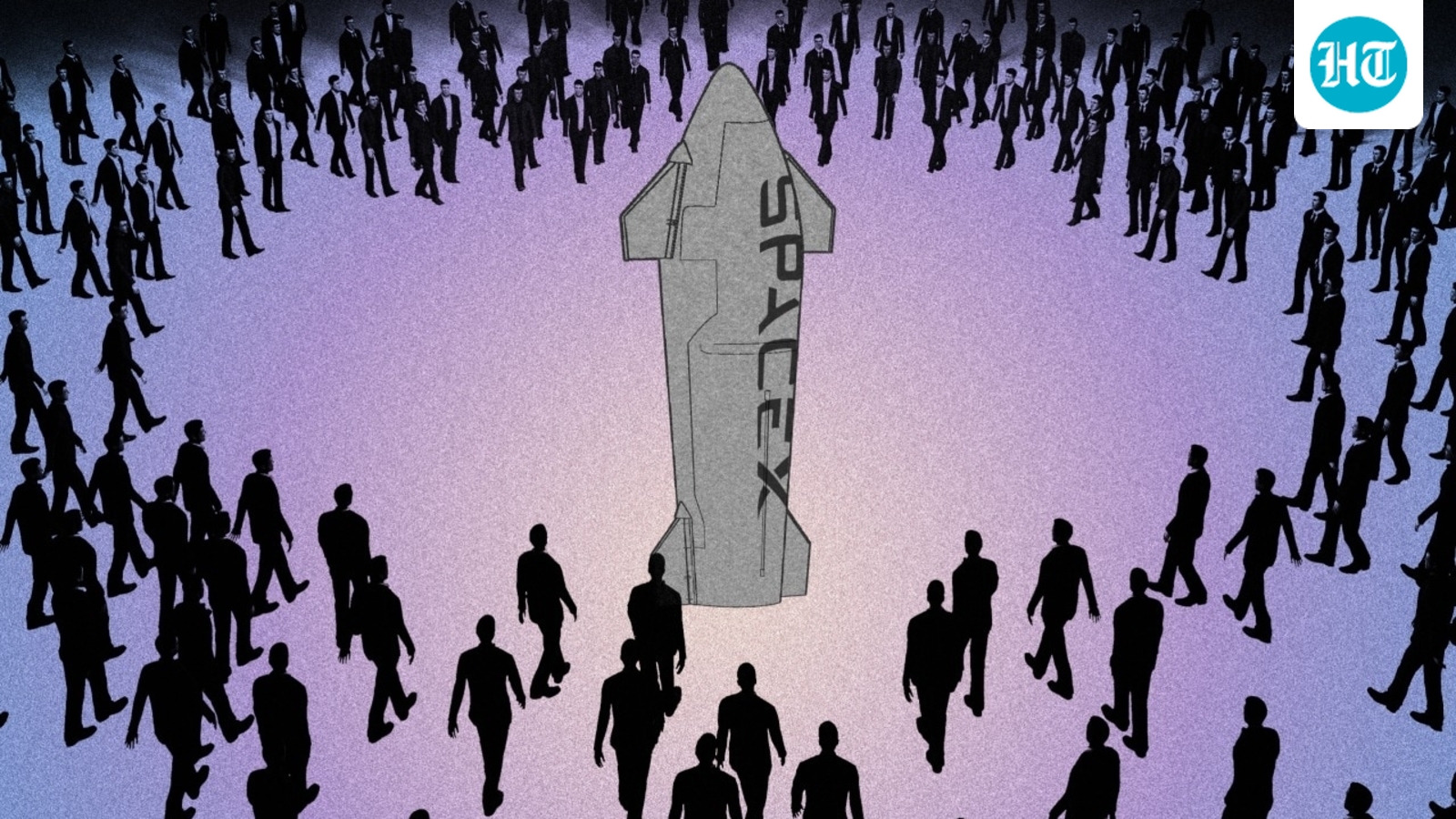
SpaceX IPO: How Elon Musk's Army of Loyalists Could Propel Him to Trillionaire Status
Elon Musk has never lacked for ambition. From colonizing Mars to reinventing the electric vehicle industry, the world's wealthiest entrepreneur consistently operates on a scale that defies conventional thinking. Now, with the highly anticipated SpaceX initial public offering expected to shatter records, Musk is poised to take his next monumental leap — one fueled not just by institutional money, but by a devoted, grassroots army of retail investors determined to ride his coattails to the top. The SpaceX IPO is widely expected to mark a new pinnacle in Wall Street's retail revolution, and it could be the single event that finally pushes Musk's net worth into trillionaire territory.
The SpaceX IPO: A Historic Moment for Wall Street
The financial world has been buzzing with anticipation as SpaceX prepares for what analysts are calling one of the most consequential public offerings in stock market history. If projections hold, the IPO could dwarf previous record-setters in terms of both valuation and retail participation. SpaceX's private valuation has already soared into the hundreds of billions of dollars, and a public listing would instantly make it one of the most valuable companies trading on any major exchange.
What makes this IPO particularly remarkable is not just the headline numbers — it is the composition of the investor base driving early demand. Unlike traditional blockbuster IPOs that are dominated by hedge funds, pension funds, and institutional players, SpaceX's offering is generating extraordinary enthusiasm among everyday retail investors. This is a crowd that has followed Musk's journey with near-religious devotion, doubling down on Tesla, purchasing Dogecoin at his behest, and cheering every Starship launch. For them, buying SpaceX stock is less a financial calculation and more a declaration of loyalty.
Retail Investors: The New Power Brokers of Modern Markets
The rise of retail investing as a genuine market force has been one of the defining financial stories of the past several years. Platforms like Robinhood democratized access to equities, the GameStop short squeeze demonstrated the collective power of ordinary investors, and the meme stock era permanently altered how Wall Street assesses risk and sentiment. SpaceX's IPO represents the logical next chapter in this evolution — a convergence of retail enthusiasm, social media momentum, and a cult-of-personality founder unlike any other in history.
Musk has cultivated this retail base with extraordinary effectiveness. His prolific presence on his own platform, X (formerly Twitter), keeps millions of followers engaged with every development across his business empire. When he posts about SpaceX milestones — a successful Starship test, a new Starlink contract, a next-generation rocket prototype — markets move and retail sentiment surges. This direct line to millions of potential investors is a strategic advantage no other CEO can replicate, and it is expected to translate directly into IPO demand on an unprecedented scale.
The Path to a Trillion-Dollar Fortune
Musk's current net worth, already the highest ever recorded, sits in a range that would have seemed fantastical just a decade ago. Yet the trillionaire threshold — long discussed as a theoretical milestone for the ultra-wealthy — now appears genuinely within reach. The SpaceX IPO is widely viewed as the most likely catalyst to close that gap.
The math is compelling. Musk holds a significant ownership stake in SpaceX, and even conservative public market valuations would add hundreds of billions of dollars to his paper wealth. Combined with his existing holdings in Tesla, X, xAI, The Boring Company, and Neuralink, a successful IPO at peak retail enthusiasm could push his total net worth past the trillion-dollar mark — making him the first person in recorded history to reach that figure.
Key Factors Driving SpaceX's Enormous Valuation
- Starlink's explosive growth: SpaceX's satellite internet service has rapidly expanded its subscriber base globally, generating substantial recurring revenue that underpins the company's long-term financial story.
- Government contracts: NASA partnerships, Department of Defense agreements, and other public sector contracts provide reliable, high-margin revenue streams that institutional investors find deeply attractive.
- Reusable rocket technology: SpaceX's mastery of reusable launch vehicles has dramatically reduced the cost of reaching orbit, giving the company a structural competitive advantage that rivals have struggled to match.
- Mars mission narrative: While the commercial case for SpaceX stands on its own, Musk's vision of human settlement on Mars gives the company an aspirational dimension that resonates powerfully with retail investors buying into a story, not just a balance sheet.
What the SpaceX IPO Means for the Broader Market
Beyond the personal windfall for Musk and his inner circle, the SpaceX IPO carries broader implications for financial markets and the culture of investing. A record-setting offering supercharged by retail participation would validate the structural shift away from Wall Street's old gatekeeping model, where access to premier IPO allocations was reserved almost exclusively for wealthy institutional clients. It would signal that the retail revolution ignited in 2020 and 2021 was not merely a speculative bubble, but a permanent reorganization of who participates in wealth creation at the highest levels.
It would also intensify conversations about market concentration, the influence of celebrity founders on stock prices, and the systemic risks that come when millions of small investors make decisions based on emotional loyalty rather than fundamental analysis. Regulators, analysts, and market observers will be watching closely.
The Loyalty Economy: Musk's Most Valuable Asset
Perhaps the most underappreciated element of Musk's path to a trillion dollars is the loyalty economy he has spent years constructing. His followers are not passive admirers — they are active participants in his financial ecosystem, purchasing his products, amplifying his message, and now lining up to fund his companies directly through public markets. This army of loyalists represents a form of distributed market power that no amount of institutional capital can fully replicate, and it may ultimately prove to be Musk's most durable competitive advantage of all.
As the SpaceX IPO approaches, one thing is increasingly clear: Elon Musk's road to becoming the world's first trillionaire will be paved not by Wall Street alone, but by the millions of ordinary believers who have decided his story is worth betting on.