
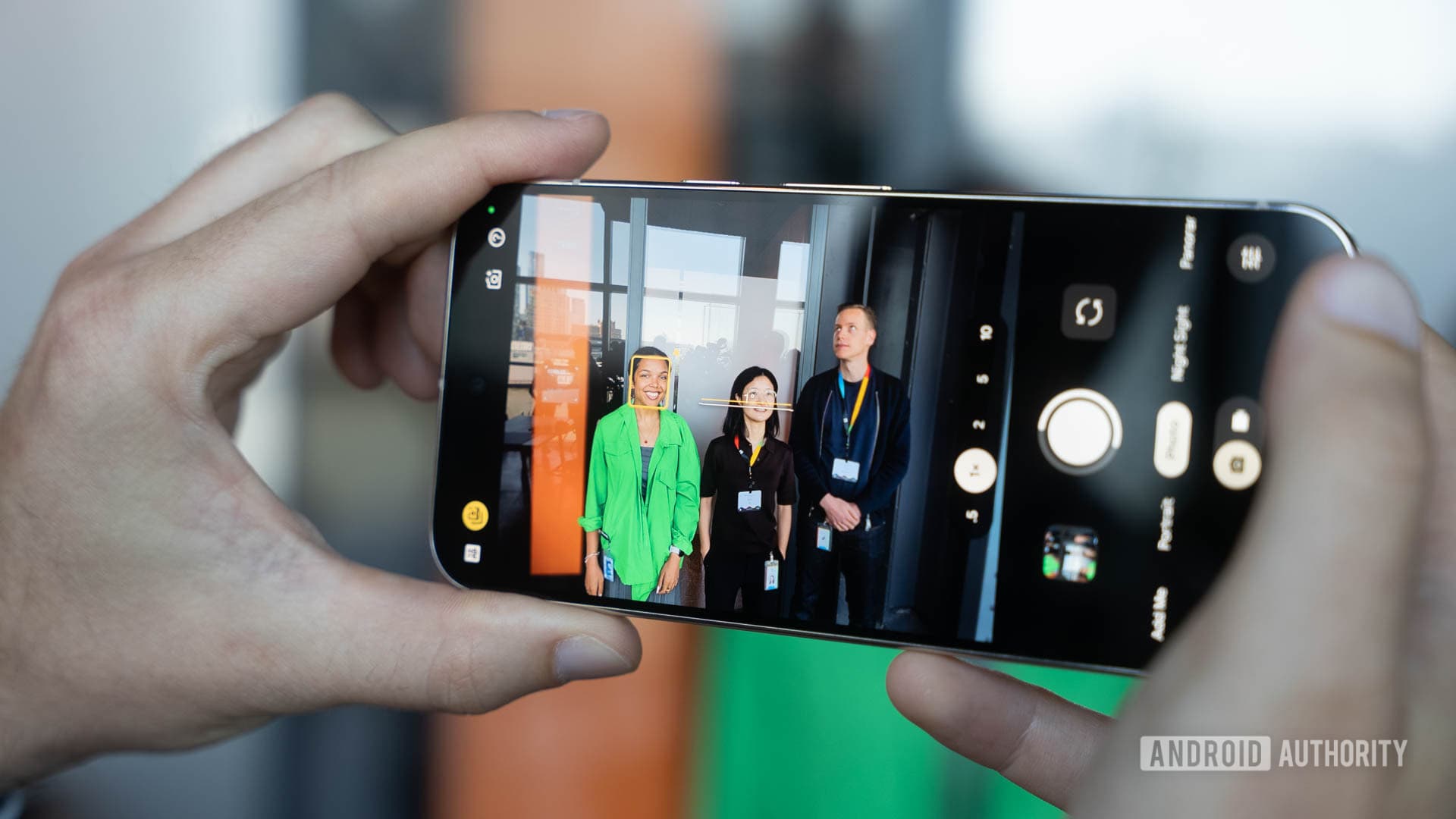
Google Pixel 10 Auto Best Take: A Year of Amazement and Confusion
The Google Pixel 10 Pro XL has earned its place as one of the most talked-about Android smartphones of 2025, and for good reason. Its camera system continues to push the boundaries of what a mobile device can do. But after nearly 10 months of daily use, one feature stands out as both the most impressive and the most genuinely baffling experience on the device: Auto Best Take. Even long-time Pixel fans and seasoned smartphone reviewers are scratching their heads trying to fully understand how it works — and yet, it keeps delivering results that feel almost magical.
What Exactly Is Auto Best Take on the Pixel 10?
Auto Best Take is Google's AI-powered group photo enhancement tool, and it first made its debut on earlier Pixel models before being significantly refined on the Pixel 10 lineup. In essence, the feature automatically analyzes a burst of photos taken in quick succession and intelligently swaps faces or expressions across frames to ensure everyone in the group looks their best in a single, polished final image.
Sound simple enough? It is — until you actually start digging into what the AI is doing under the hood. The Pixel 10 doesn't just pick the best photo from a burst. It's compositing elements from multiple separate shots, using computational photography and on-device machine learning to create an image that may not have technically existed as a single captured moment. The result is often indistinguishable from a naturally perfect photo, which is precisely what makes it so disorienting to think about.
How Auto Best Take Works in Practice
When you take a group photo with the Pixel 10, the phone quietly captures several frames in rapid succession without you needing to enable burst mode manually. Once you head into Google Photos to review the shot, you'll notice a small suggestion prompt if the AI detects that the photo could be improved — perhaps someone blinked, was mid-sentence, or turned away at the wrong moment.
Tapping that suggestion opens the Auto Best Take editor, where you can:
- Review which faces the AI has flagged as potentially improvable.
- Choose from alternative expressions or poses captured across the burst frames.
- Accept the AI's automatically suggested composite or manually select the best version for each individual person.
- Save the edited version as a new image while keeping the original intact.
The technology is seamlessly integrated into Google Photos, meaning there's no separate app or complicated workflow. For most users, it just works — and it works remarkably well. Edges are clean, lighting is matched across faces, and the composite image rarely betrays any sign of digital manipulation.
Why It's Still So Confusing After 10 Months
Here's where things get philosophically and practically interesting. After using Auto Best Take nearly every time a group photo situation arises, the confusion doesn't stem from the feature not working. It stems from it working almost too well. There's a persistent cognitive dissonance that comes with knowing the image you're looking at is a composite — a moment that never fully happened — yet one that represents the truest version of your memory of that moment.
Several questions come up repeatedly with extended use:
- Is the photo authentic? Technically no, but emotionally and contextually, yes. Everyone was present, everyone was smiling at some point during the burst. The AI simply collated those genuine moments into one frame.
- When does it activate automatically versus manually? The Pixel 10 doesn't always surface the Auto Best Take suggestion, even when photos might benefit from it. The criteria the AI uses remain opaque.
- How does it handle very large groups? Performance degrades noticeably with more than six or seven people in the frame, and not every face receives the same quality of attention from the AI.
- Why does it occasionally suggest changes that make the photo worse? The AI's judgment, while impressive, isn't infallible. Occasionally it flags an expression that was already perfectly fine and suggests a replacement that looks slightly off in context.
Auto Best Take vs. Competitors: Where Does Pixel 10 Stand?
Samsung's Galaxy S25 series offers a similar feature within its AI photo editing suite, and Apple has its own blend of computational photography tricks in the iPhone 16 lineup. But Google's implementation on the Pixel 10 remains arguably the most seamless and natural-looking of the three. Where Samsung's version can sometimes produce slightly uncanny valley results and Apple's approach leans more toward overall scene optimization, Google has fine-tuned face-swapping to a level that genuinely feels invisible in the final output.
This advantage comes directly from Google's deep investment in on-device AI and its long history of computational photography research. The Tensor G5 chip powering the Pixel 10 handles the image analysis and compositing entirely on the device, which also means no photos are sent to a cloud server for processing — a meaningful privacy consideration for many users.
Should Auto Best Take Change How We Think About Photography?
This might be the most important question the Pixel 10 raises in 2025. Smartphone photography has always involved some level of computational enhancement — HDR processing, noise reduction, AI scene detection. Auto Best Take simply takes that intervention a step further by altering the content of an image rather than just its technical qualities.
For everyday personal photography — birthday parties, family reunions, holiday gatherings — this is almost universally a good thing. Nobody treasures the photo where grandma's eyes were closed. What people treasure is the memory, and Auto Best Take helps preserve that memory more faithfully than a single randomly timed shutter click ever could.
Final Verdict: Impressive, Imperfect, and Worth Every Bit of Confusion
After 10 months with the Google Pixel 10 Pro XL, Auto Best Take remains the feature that generates the most conversation every single time it's demonstrated to someone new. It's not perfect — the inconsistency in when it surfaces suggestions, the occasional misjudgment of expressions, and the philosophical unease about image authenticity are all real concerns. But the sheer frequency with which it rescues an otherwise ruined group photo is remarkable.
If you're considering the Pixel 10 purely for its camera capabilities, Auto Best Take alone might not be the deciding factor — but it's a compelling piece of a very strong photographic package that continues to impress, and occasionally confuse, even after nearly a year of daily use.