
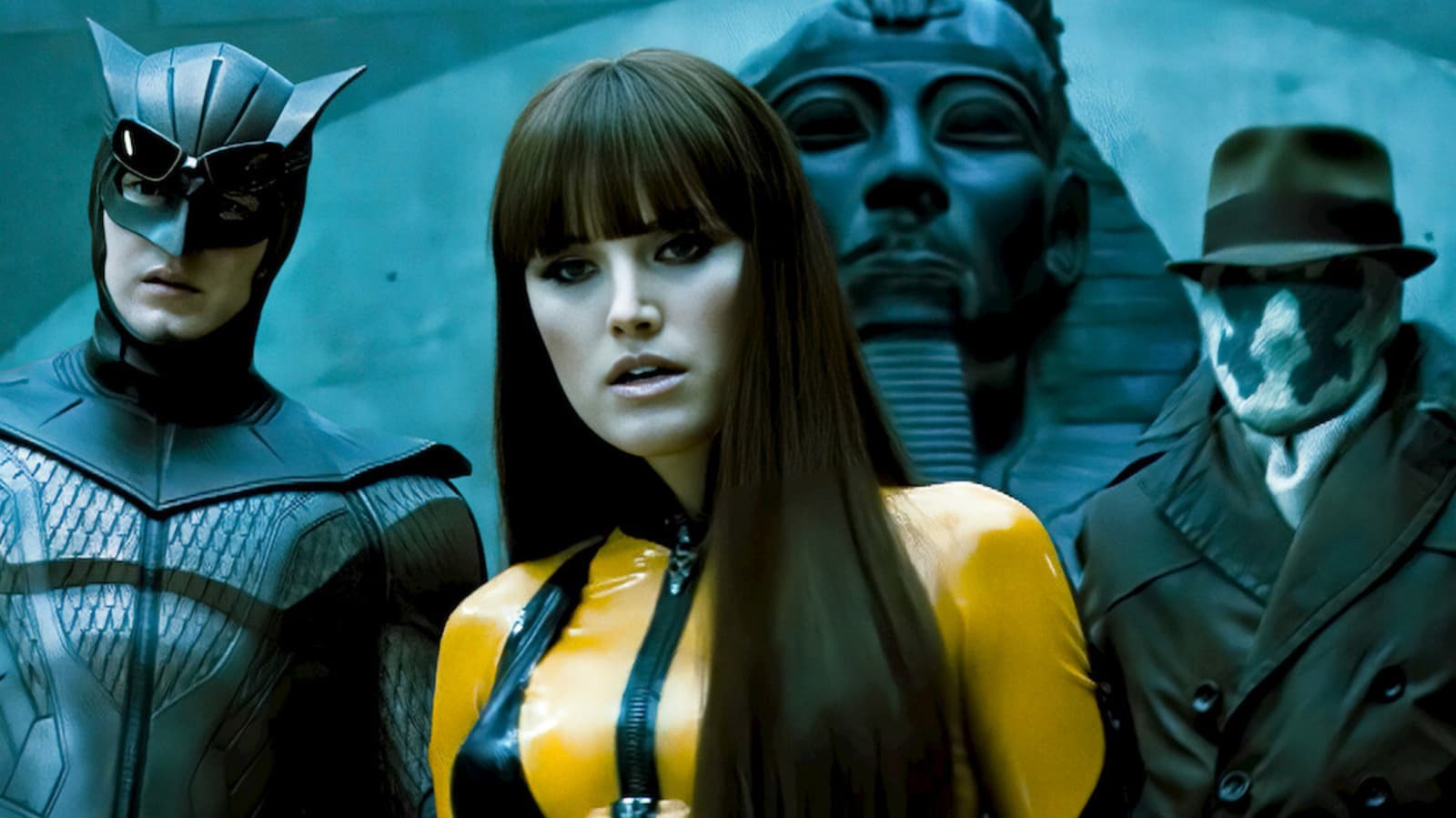
When a Legend Meets a Divisive Masterpiece: Roger Ebert and Watchmen
Few names carry as much weight in film criticism as Roger Ebert. The Pulitzer Prize-winning critic spent decades shaping how audiences understood and appreciated cinema, from Hollywood blockbusters to intimate foreign-language dramas. So when Ebert offered a full-throated, enthusiastic endorsement of Zack Snyder's Watchmen in 2009, it turned more than a few heads — especially because the film was already generating fierce debate among comic book devotees and mainstream moviegoers alike. Ebert's glowing four-star review of Watchmen remains one of the more fascinating and telling moments in modern film criticism, a reminder that great art rarely lands the same way with every audience, and that a seasoned eye can often see things others miss.
What Is Watchmen and Why Was It So Divisive?
Released in March 2009, Watchmen was Zack Snyder's ambitious adaptation of Alan Moore and Dave Gibbons' landmark 1986–1987 DC Comics limited series of the same name. The source material is widely considered one of the greatest graphic novels ever written — a dark, complex, and deeply philosophical deconstruction of the superhero genre set against the backdrop of an alternate Cold War America where costumed vigilantes exist in the real world.
For years, the book was famously labeled "unfilmable." Its layered narrative structure, moral ambiguity, unreliable characters, and dense thematic content seemed to resist the conventions of a mainstream studio picture. When Snyder finally brought it to the screen with a reported budget of around $130 million, the result was polarizing in the extreme.
On one side stood fans who felt Snyder had done justice to the source material, translating Moore and Gibbons' imagery with stunning visual fidelity. On the other were critics and hardcore readers who felt the film was style over substance — a technically impressive but emotionally hollow recreation that failed to capture the true spirit of the comic. The debate has never fully been settled, and Watchmen continues to divide opinion even today, more than fifteen years after its release.
Roger Ebert's Take: A Four-Star Triumph
Into this heated conversation stepped Roger Ebert, who awarded Watchmen a rare four out of four stars. For a film that many critics treated with skepticism or outright hostility, Ebert's enthusiasm was striking. He praised the movie as a singular, adult-oriented superhero film that demanded something unusual from its audience: serious engagement.
Ebert highlighted Snyder's visual storytelling, describing the film's imagery as operatic and genuinely cinematic rather than merely illustrative of the source comic panels. He appreciated that Watchmen refused to condescend to its viewers, trusting them to grapple with morally compromised protagonists, ambiguous endings, and questions about power, justice, and human nature that have no easy answers.
Crucially, Ebert seemed to appreciate the film on its own terms — not just as an adaptation of a beloved graphic novel, but as a piece of cinema in its own right. That distinction matters. Many of the harshest criticisms of Watchmen came from fans who measured the film exclusively against the book. Ebert, operating from the vantage point of pure film criticism, evaluated what appeared on screen and found it genuinely impressive.
What Ebert's Review Tells Us About Zack Snyder
Zack Snyder is himself a divisive figure in popular culture. His signature style — slow-motion action sequences, desaturated color palettes, heavy mythological symbolism, and an unflinching willingness to dwell in darkness — has earned him both a passionate fanbase and a vocal set of detractors. Films like Batman v Superman: Dawn of Justice and Sucker Punch have been subjects of enormous critical debate, and his extended cut of Justice League, released in 2021, became a cultural phenomenon in its own right.
But Watchmen is perhaps the purest expression of what Snyder does best. He is, above all else, a visual artist with a deep reverence for his source material. Whether or not one agrees with his interpretive choices, there is no denying that Watchmen is a film made with tremendous care and a distinct artistic vision. Ebert, who always prioritized intention and execution in his criticism, clearly recognized this.
The Legacy of Watchmen and Why It Still Matters
More than fifteen years on, Watchmen occupies a peculiar and fascinating place in superhero cinema history. It arrived just one year after the MCU launched with Iron Man, at a moment when the genre was beginning its ascent toward total cultural dominance. While the MCU largely built its identity around crowd-pleasing optimism and serialized storytelling, Watchmen stubbornly insisted on doing the opposite — and paid the price commercially, underperforming at the box office relative to its budget.
Yet the film has grown in stature over time. HBO's acclaimed Watchmen limited series in 2019, which built on the world of the original comic rather than adapting it directly, reignited interest in the property and demonstrated how rich and relevant its themes remain. Questions about systemic violence, vigilante justice, and the corrupting nature of power feel no less urgent today than they did when Moore first put them to paper in the 1980s.
The Enduring Value of Roger Ebert's Critical Legacy
Roger Ebert passed away in April 2013, but his critical legacy endures. His reviews remain widely read on RogerEbert.com, maintained by his wife Chaz Ebert and a team of dedicated writers who carry his approach forward. His Watchmen review stands as a reminder that great film criticism requires the courage to champion challenging work, even when doing so puts you at odds with prevailing opinion.
- Ebert consistently argued that the best genre films use their conventions to explore something deeper about human experience.
- He believed that respecting an audience's intelligence was among the highest virtues a filmmaker could demonstrate.
- He was never reluctant to stand apart from critical consensus when his own careful viewing led him to a different conclusion.
In praising Watchmen, Ebert did all three of those things at once. Whether you agree with his assessment or not, his review invites any viewer to approach the film with fresh eyes and an open mind — which, in the end, is exactly what the best criticism should do. For fans of Zack Snyder, superhero cinema, or film history more broadly, Ebert's endorsement of Watchmen remains one of the most thought-provoking intersections of popular culture and serious criticism in recent memory.