
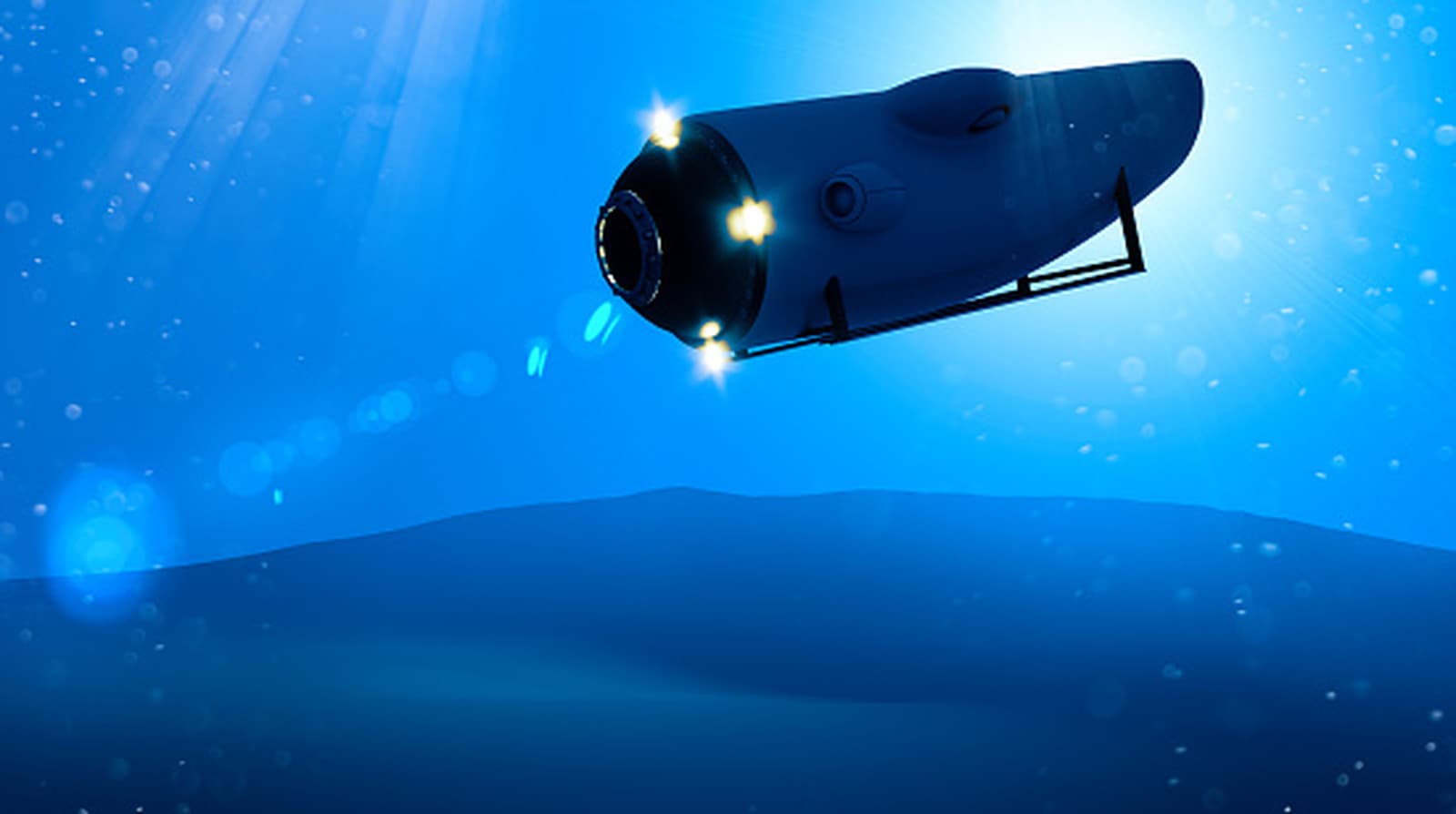
A Submarine Dove Into Antarctica's Depths and Discovered Something Unexplained
The ocean floor beneath Antarctica's ice shelves is one of the least explored environments on Earth. Cold, dark, and buried under thousands of feet of ancient ice, these waters hold secrets that scientists are only beginning to unravel. Recently, an autonomous submarine called Ran was dispatched into this frozen wilderness on a mission to gather data — and what it found before mysteriously vanishing has captured the attention of researchers and ocean explorers around the world.
Meet Ran: The Autonomous Submarine Built for Extreme Exploration
Ran is no ordinary submarine. Designed and operated by researchers at the University of Gothenburg in Sweden, Ran is an autonomous underwater vehicle (AUV) engineered to withstand some of the most punishing ocean conditions on the planet. Unlike crewed submarines, AUVs like Ran can be programmed to navigate complex underwater terrain without a human pilot, collecting data around the clock in environments that would be far too dangerous for human divers or traditional research vessels.
The submarine is roughly the size of a large torpedo and carries an array of sophisticated scientific instruments capable of measuring water temperature, salinity, ocean currents, and the physical structure of the seafloor and underside of ice shelves. Ran has previously completed several successful missions in polar waters, making it one of the most accomplished research AUVs in active deployment today.
For this particular mission, Ran was directed toward the Thwaites Glacier — sometimes called the "Doomsday Glacier" — located in West Antarctica. Scientists have been closely monitoring Thwaites for years because of its potential to significantly contribute to global sea level rise if it continues its accelerating melt. Understanding exactly what is happening beneath its ice shelf is considered a scientific priority of enormous global importance.
What the Submarine Found Beneath the Ice
As Ran navigated beneath the Thwaites ice shelf, its instruments began recording something unexpected. The submarine detected unusual patterns in the water — readings that deviated significantly from what scientists anticipated finding based on previous surface-level observations and existing climate models.
Among the most startling discoveries were signs of warm water intrusion deep beneath the ice shelf. Ocean water that is warmer than expected was found pushing far under the glacier, making direct contact with the base of the ice in ways that accelerate melting from below. This kind of basal melting is particularly dangerous because it is hidden from view and difficult to monitor without equipment exactly like Ran.
The submarine also captured data on the physical topology of the ocean floor in this region, revealing complex ridges and channels that appear to be funneling warm water directly toward the most vulnerable parts of the glacier's underbelly. These underwater channels act almost like highways for warmer Atlantic water, guiding it toward the grounding line — the point where the glacier transitions from resting on bedrock to floating on the ocean — at a rate that alarmed the research team.
Scientists also noted abnormal current behavior near the seafloor. Rather than the relatively stable, predictable currents they had modeled, Ran's instruments detected turbulent and irregular flow patterns that suggest the glacier's retreat may already be reshaping the physical environment of the deep ocean beneath it. This creates a feedback loop that could accelerate melting even further.
Then Ran Disappeared
After completing a significant portion of its mission, the submarine went silent. Ran failed to return at its scheduled time and could not be contacted. For researchers who had invested enormous time and resources into the mission, the sudden disappearance was both alarming and deeply frustrating. The loss of an AUV in polar waters, while not entirely unheard of, is a serious setback — these machines are expensive, difficult to replace, and carry irreplaceable mission data.
Fortunately, in Ran's case, the story did not end there. The submarine was eventually recovered, though the precise circumstances of its disappearance and recovery highlight just how dangerous and unpredictable research missions in these remote Antarctic waters can be. Operating beneath a moving, fracturing ice shelf means that the environment itself can change rapidly, trapping or disorienting even the most sophisticated autonomous vehicles.
Why This Discovery Matters for the Future of Our Planet
The data collected by Ran before it disappeared represents a breakthrough in humanity's understanding of what is happening at one of the most critical points in the global climate system. The Thwaites Glacier holds enough ice to raise global sea levels by more than two feet on its own, and if it destabilizes the broader West Antarctic Ice Sheet, the consequences could be far more severe.
- Warm water intrusion beneath the glacier is happening faster and deeper than existing models predicted.
- Underwater topography is actively channeling warm water toward the glacier's most vulnerable regions.
- Turbulent seafloor currents suggest the glacier's retreat is already changing the local ocean environment.
- These findings will need to be incorporated into updated sea level rise projections used by governments and planners worldwide.
The mission also underscores the critical role that autonomous underwater vehicles now play in climate science. Humans simply cannot reach these environments safely or affordably, but machines like Ran can — and the data they gather is proving to be essential.
The Broader Push to Understand Antarctica's Hidden Ocean
Ran's mission is part of a larger international effort to study the waters surrounding and beneath Antarctica's massive ice shelves. Programs like the International Thwaites Glacier Collaboration (ITGC) have brought together scientists from the United States, the United Kingdom, Sweden, and other nations to coordinate research using ships, aircraft, satellite observation, and robotic vehicles.
Each mission adds another layer of detail to our picture of a region that is changing rapidly. What submarines like Ran are finding on the ocean floor is not just scientifically fascinating — it is a direct warning about the pace of climate change and the urgency of understanding and addressing its effects before they become irreversible.
The strange readings Ran recorded, the warm water highways carved into the seafloor, and the turbulent currents swirling beneath one of the world's largest glaciers are not abstract data points. They are evidence of a planet in transformation, gathered by a small, remarkable machine that braved one of Earth's most hostile environments — and barely made it back to tell the story.