
When Fine Art Meets Furniture: The Turner Revival Changing Interior Design
In an era dominated by fast furniture, algorithm-driven aesthetics, and disposable décor, a quietly radical movement is gaining momentum in the design world — one that looks not forward, but back. Nearly 200 years after J.M.W. Turner stood at the edge of the Thames and committed light itself to canvas, his luminous vision is finding an unexpected new medium: furniture. And the results are not merely beautiful. They are instructive.
The Turner-inspired furniture collection making waves among interior designers and collectors alike is more than a stylistic tribute. It is a considered argument for what design should aspire to be — atmospheric, emotionally resonant, and built to endure far longer than a single trend cycle. In a world of fleeting Instagram aesthetics, Turner's 200-year-old design philosophy feels startlingly urgent.
Who Was J.M.W. Turner, and Why Does He Matter to Design?
Joseph Mallord William Turner (1775–1851) is widely regarded as one of the greatest painters in British history. Often called "the painter of light," Turner was a master of capturing atmospheric conditions — stormy seas, golden sunsets, industrial fog, and the blinding radiance of an open sky. His work transcended mere representation; it evoked feeling, movement, and the sublime power of nature.
What made Turner revolutionary was not just his technique but his philosophy. He believed that art should make you feel something before you understand it. Color, texture, and form were emotional instruments as much as they were aesthetic tools. For Turner, beauty was inseparable from atmosphere — and that principle, it turns out, translates remarkably well to the design of physical spaces and objects.
The Collection: Where Romantic Painting Becomes Livable Art
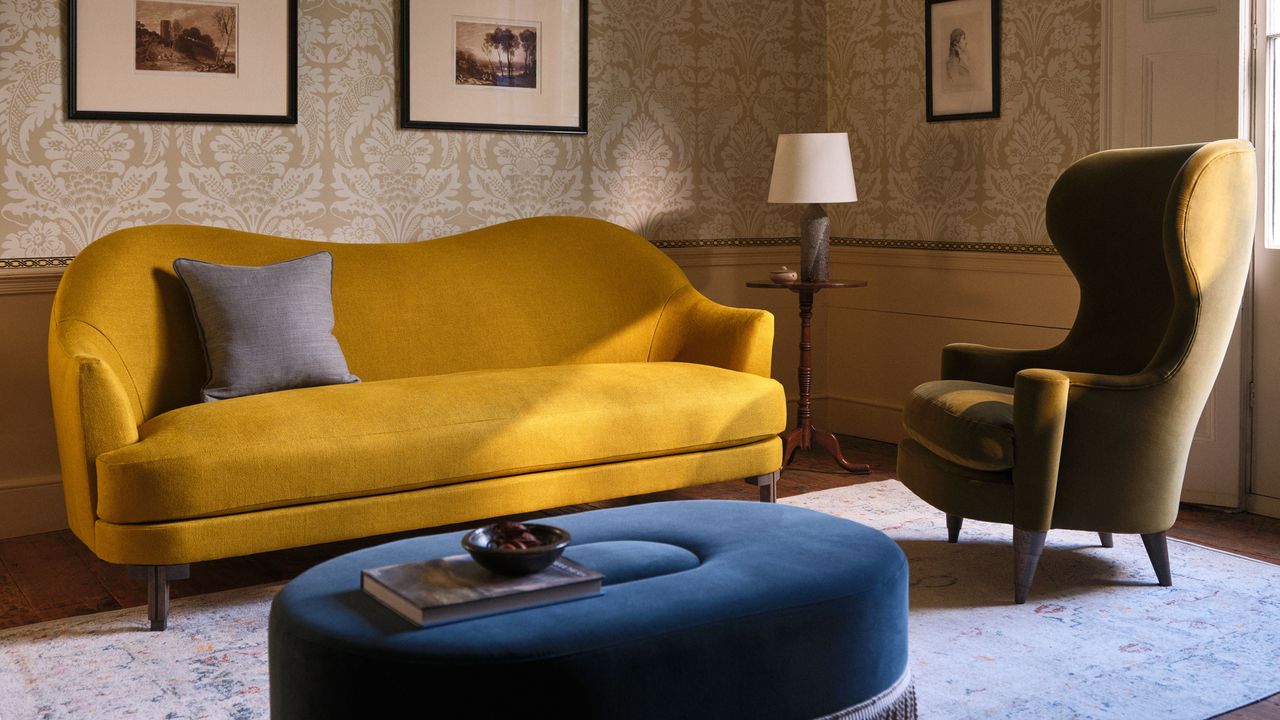
The Turner-inspired furniture collection at the center of this design conversation draws directly from the painter's most iconic visual themes: the golden warmth of his coastal sunrise studies, the moody gradients of his storm-at-sea canvases, and the interplay of soft and hard edges that characterize his mature style.
Designers working in this vein have translated those qualities into tangible objects through several deliberate choices:
- Color palettes rooted in natural light: Warm ochres, soft greys, burnt umbers, and hazy pearl tones evoke Turner's atmospheric skies rather than following seasonal Pantone forecasts. These are colors that age gracefully and respond to the natural light in a room the way a canvas does on a gallery wall.
- Textural contrast as a design principle: Turner layered glazes to create depth and luminosity. The furniture collection mirrors this by pairing rough-hewn wood grains against polished lacquer surfaces, matte upholstery against burnished metallic feet — deliberate friction that creates visual and tactile richness.
- Organic, imprecise forms: Rather than the crisp, geometric lines of contemporary minimalism, Turner-inspired pieces embrace gentle curves, asymmetrical silhouettes, and forms that suggest movement — echoing the wind-swept, wave-tossed energy of his seascapes.
- Craftsmanship as a form of meaning: Just as Turner labored obsessively over his canvases, the furniture in this collection prioritizes hand-finishing, artisanal joinery, and natural materials that develop character over time.
The 200-Year-Old Design Lesson We Keep Forgetting
Here is the lesson Turner offers us, and it is deceptively simple: design should create an atmosphere, not just fill a space.
Modern interiors often mistake completeness for coherence. We fill rooms with objects that are individually attractive but collectively neutral — producing spaces that photograph well but don't feel like anywhere in particular. Turner's entire artistic practice was a rebellion against exactly this kind of visual inertia.
In his 1843 defense of Turner, the critic John Ruskin famously argued that the painter's genius lay in his ability to render not the appearance of nature but its effect on the human spirit. That distinction is everything. Appearance is what a room looks like in a listing photograph. Effect is what it feels like to sit in it at dusk with a glass of wine.
Turner-inspired furniture is designed to produce effect. Its warmth, its textural depth, its soft irregularities — these are not accidents or rustic affectations. They are deliberate strategies for making a room feel inhabited, layered, and alive.
Why This Approach Resonates So Strongly Right Now
The timing of this Turner revival is not coincidental. After years of stark Scandinavian minimalism, clinical all-white interiors, and the relentless churn of micro-trends, a growing number of homeowners and designers are craving something more grounded. People want their homes to feel like sanctuaries, not showrooms. They want permanence in a world that changes faster than they can keep up with.
Turner's work has always offered exactly that kind of comfort. His paintings are immersive rather than decorative — they wrap you in atmosphere the moment you look at them. That is precisely what great furniture, at its best, can do for a room.
Timelessness as a Sustainable Strategy
There is also an environmental argument hiding inside this aesthetic one. Fast furniture is one of the interior design industry's least-discussed sustainability problems. Pieces built cheaply to match a current trend end up in landfills within a decade. Turner-inspired design, with its emphasis on enduring palettes, natural materials, and handcrafted quality, pushes against this cycle. Buying one piece built to last a generation is a more sustainable act than refreshing a room every three years.
How to Bring Turner's Principles Into Your Own Home
You don't need to invest in an entire curated collection to apply Turner's design philosophy to your living space. A few targeted choices can fundamentally shift the atmosphere of a room:
- Anchor with warmth: Introduce one large piece — a sofa, a dining table, a wardrobe — in a warm, complex tone rather than a neutral grey or flat white. Think aged walnut, burnished terracotta, or deep antique gold.
- Layer textures deliberately: Pair a smooth marble surface with rough linen, or a polished wood floor with a heavily textured wool rug. The contrast creates depth the eye can explore.
- Edit toward atmosphere: Remove objects that are merely filling space. Keep what creates mood. Turner's canvases are powerful partly because of what he left out — implied sky rather than rendered cloud.
- Let light do the work: Position key furniture pieces near natural light sources. Turner's entire philosophy was built around how light transforms surfaces. Let it transform yours.
A Living Lesson in What Design Is For
The Turner-inspired furniture collection gaining attention today is, at its heart, a provocation. It asks us to reconsider why we furnish our homes at all — not merely to store things or sit on things, but to construct an environment that sustains and enriches us. That is a 200-year-old idea. It is also a radical one. And right now, it might be exactly the design lesson we need.