
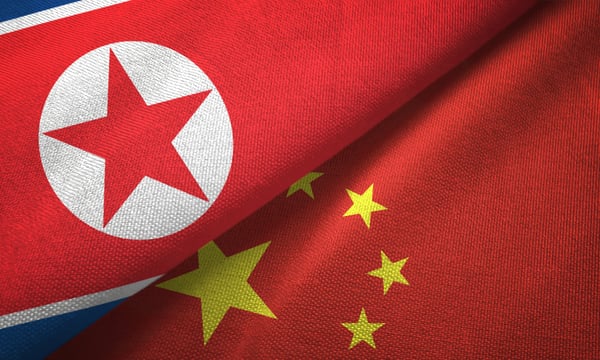
Xi and Kim Agree to Strengthen Their 'Strategic Relationship' Guided by Socialist Principles
In a development with significant implications for geopolitics across the Asia-Pacific region and beyond, Chinese President Xi Jinping and North Korean leader Kim Jong Un have pledged to deepen and fortify their bilateral "strategic relationship" on the basis of shared socialist principles. Critically, Xi's remarks during the exchange amounted to a de facto recognition of North Korea as a nuclear-armed state — a landmark acknowledgment that marks a notable shift in Beijing's long-held diplomatic posture toward Pyongyang.
A Reaffirmed Alliance Built on Ideological Common Ground
The renewed pledge between Beijing and Pyongyang underscores the ideological foundation that has long defined their partnership. Both nations have framed their cooperation not merely in transactional or security terms, but as an expression of a shared communist and socialist heritage — one that positions them, at least rhetorically, as ideological counterweights to the liberal democratic order led by the United States and its allies.
Xi's language was notably warm and affirming. Rather than pressing Pyongyang on its weapons programs — as international bodies and Western governments have repeatedly demanded — the Chinese president chose to highlight the achievements North Korea has made in recent years. This framing was interpreted by analysts as Beijing lending legitimacy not only to Kim Jong Un's governance but also, implicitly, to the nuclear capabilities his regime has developed in defiance of United Nations Security Council resolutions.
For North Korea, such recognition from its most powerful neighbor and primary economic lifeline carries enormous strategic weight. It signals that China is no longer willing — or able — to treat Pyongyang's nuclear status as a temporary aberration to be reversed through diplomacy. Instead, Beijing appears to be recalibrating toward a pragmatic acceptance of a nuclear-armed DPRK as a lasting feature of the regional security landscape.
What De Facto Nuclear Recognition Actually Means
Xi stopping short of explicitly declaring North Korea a nuclear state while simultaneously praising its recent "achievements" is a carefully calibrated diplomatic maneuver. In diplomatic terms, de facto recognition does not require a formal declaration. It simply requires a pattern of behavior — statements, policy postures, and diplomatic engagements — that treat a reality as established fact rather than as something to be reversed.
By lauding North Korea's progress without condemning its weapons development, Xi has effectively placed China in a position where demanding denuclearization becomes increasingly untenable. This matters profoundly for international nonproliferation efforts. If China — the one country with the most leverage over North Korea — is no longer operating from a premise that denuclearization is achievable or desirable, then the diplomatic architecture built around that goal begins to collapse.
Washington, Seoul, and Tokyo have all invested enormous diplomatic capital in a framework that treats a nuclear-free Korean Peninsula as the baseline objective. Xi's posture challenges that framework at its foundation.
The Broader Context: Why This Moment Matters
The timing of this renewed pledge is not coincidental. It comes against the backdrop of heightened global tensions, including continued friction between the United States and China over Taiwan, trade, and technological competition. A closer China-North Korea alignment serves both parties' interests in distinct but complementary ways.
- For China: A loyal and stable North Korea acts as a strategic buffer against American military presence in South Korea and Japan. Keeping the Korean Peninsula in a state of managed tension limits the circumstances under which U.S. forces might approach China's northeastern border.
- For North Korea: Chinese political endorsement, even implicit, provides a crucial layer of legitimacy that partially offsets the regime's international isolation. It also reinforces the domestic narrative that Pyongyang's nuclear program has earned respect and recognition from major powers.
- For the region: The solidification of this axis complicates trilateral security cooperation between the U.S., South Korea, and Japan, and raises new questions about the efficacy of the existing sanctions regime against Pyongyang.
International Reactions and Diplomatic Fallout
Reactions from the international community were predictably divided. Western governments expressed concern over what they characterized as Beijing's abandonment of a principled stance on nuclear nonproliferation. South Korea's government issued statements reaffirming its commitment to denuclearization, while analysts in Washington warned that Xi's posture would embolden Kim Jong Un to pursue further advances in his missile and nuclear programs without fear of meaningful consequences.
By contrast, Russian officials — who have themselves deepened ties with Pyongyang amid Moscow's ongoing war in Ukraine — welcomed the renewed China-DPRK partnership as evidence that a multipolar world order was taking shape, one in which Western-led institutions no longer hold exclusive authority over defining the rules of international conduct.
Looking Ahead: A Shifting Regional Order
The agreement between Xi and Kim to strengthen their strategic relationship is more than a bilateral diplomatic exchange — it is a signal that the post-Cold War consensus around Korean Peninsula denuclearization is under serious stress. With China moving toward implicit acceptance of a nuclear North Korea, the diplomatic tools that have defined international policy toward Pyongyang for decades are in urgent need of reassessment.
Whether this moment accelerates a new arms dynamic in Northeast Asia, prompts fresh multilateral dialogue, or simply hardens existing fault lines remains to be seen. What is clear is that the relationship between Beijing and Pyongyang — rooted in socialist solidarity and now reinforced by mutual strategic necessity — is entering a new and consequential chapter. Policymakers, analysts, and governments across the region will be watching closely to understand what this evolving alliance means for the fragile balance of peace and stability in one of the world's most militarized regions.